Science Diplomacy in Practice
What is science? How is it different from technology?
Technology is the product and instrument of science, science is more abstract. In summary, technology is the application of science : our pens, chairs, etc… In the same way, science and engineering aren’t the same thing. A scientist will ask themselves how something is possible (e.g. how is it that a plane flies), and the engineer will ask themselves how are we able to build something so it works (plane wings that can fly f.ex.).
Science is therefore a mindset.
Is it okay to disagree in science?
When something repeats itself in the same conditions, it’s a fact→ evidence based (until you have evidence it is not, which creates a new normal). So the basis here is opening ourselves to disagreement, so as to grow.
Convergence of Technologies
Is it good or bad?
What is AI changing?
AI is automating lots of processes, although it can’t replace everything. It speeds up progress, and is speeding up itself indeed. It can also process lots of information at the same time. Every single science is affected and developed at a great pace, because of these many applications→AI as an enabler and catalyser.
What is cooking in the labs of the world
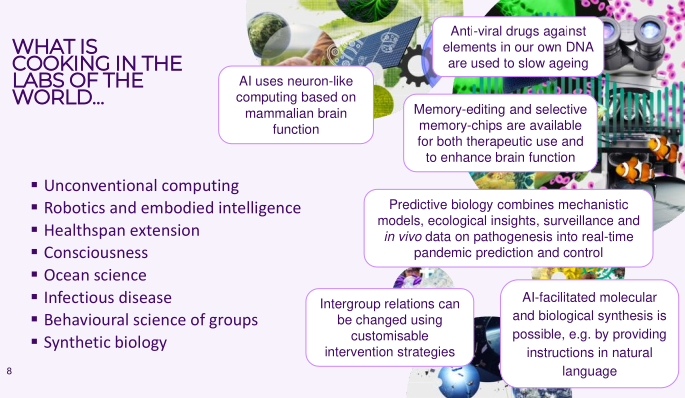 E.g. Neuralink for fighting disabilities and neurological disorders. But fast-forward to the future brain readings can be stored in computers, to download it back to remember stuff and upload it somewhere else, as well as delete it. Can’t be done yet, but the technology is advancing fast. This isn’t science fiction, it’s being done by scientists and will be here soon.
But this doesn’t stop here, synthetic biology (like in China) and many other fields are also advancing→would allow to make life in our planet resilient against climate change among many other things.
Quantum computing
Quantum physics looks at particles at the micro level, despite not understanding their changes in behaviour the applications are great : computer f.ex. Computers are calculating machines that process information given to them in a certain language, but quantum ones function differently as they can process much more information in parallel→it’s like solving a maze by doing all the options at the same time instead of one path at a time. It could:
- Deeply disrupt secure communication and global cybersecurity;
- Save lives through quantum detection, sensing & communication;
- Dramatically improve logistics, mission planning, and resource allocation;
- Turbocharge the implementation of the SDGs.
So what?
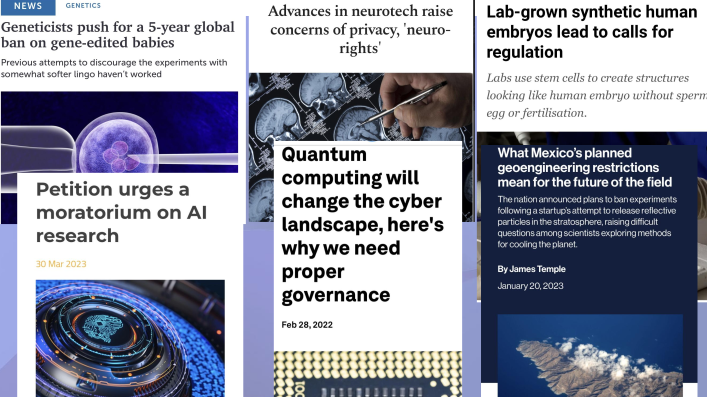 Advances raise concerns and catalyse regulation when things go too fast or in an unexpected way, but who decides when to restart or stop again? Where the data goes in certain projects?
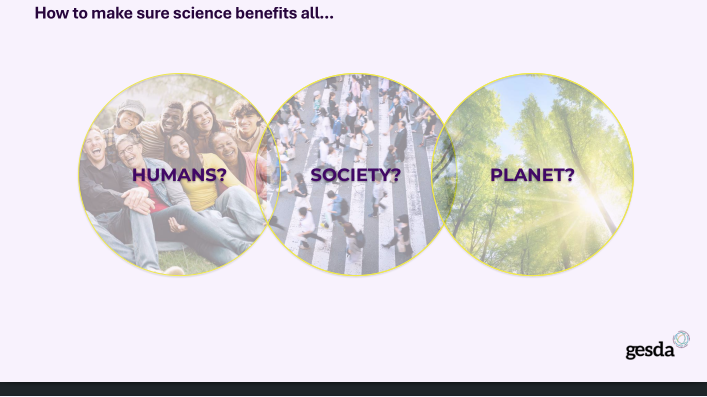
Sometimes we just don’t know the consequences, e.g. geoengineering helps us but what are it’s downsides→ is it dangerous, pollutant, etc…? Scientists work on this, they get to the why and how. Are people in diplomacy equipped to work with that information and apply it to regulations and negotiations? Expertise is missing in formation (theoretical knowledge, classes, ethical frameworks, among others). It is also necessary to get scientists/experts and regulators to be connected. That’s how we make sure this benefits all:
Bridging the mindset
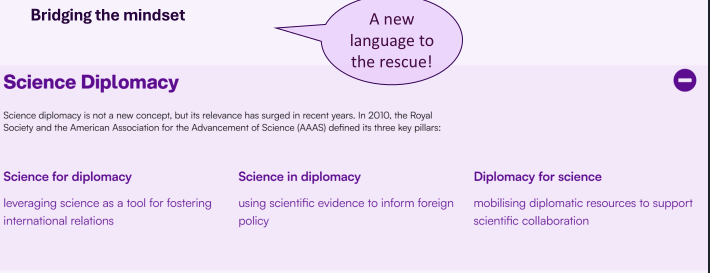 If you only work with stuff in the lab, you can think in advance. Now things sometime get applied before we can think and regulate. Diplomacy was done like this normally. Science as a tool for diplomacy, like in CERN where many opposed countries work together. But we also see diplomacy for science of course. However a new language and way of doing this can be used, science in diplomacy→transforming science into informed foreign policy.
The role of science diplomacy in a changing geopolitical context
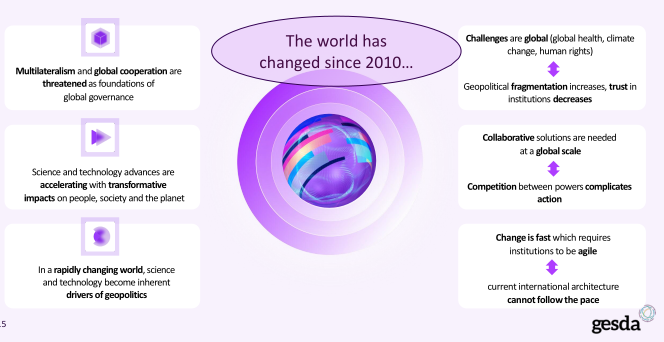 Multilateralism is threatened, and without working together global solutions do not appear. Our world is rapidly changing and competition is still ongoing, current architecture cannot keep up and we need to collaborate.
It’s time to rethink science diplomacy
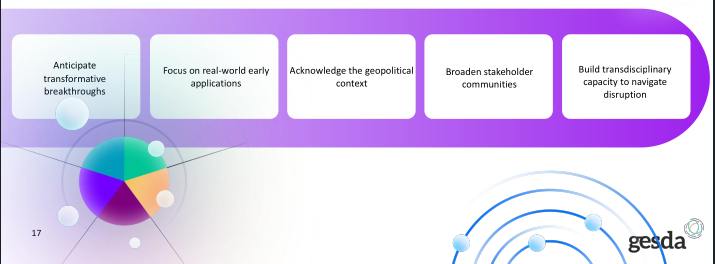
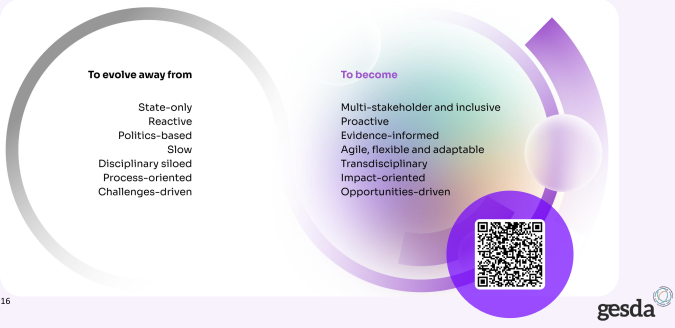 To get to a renewed multilateralism we have to implement:
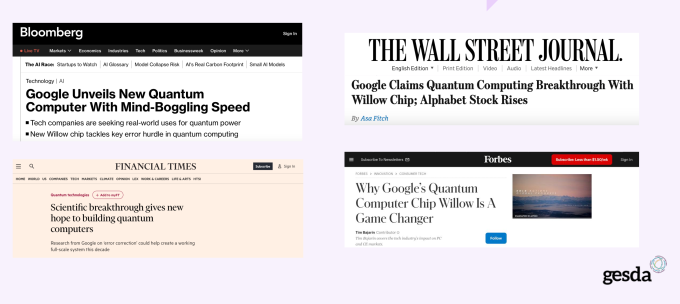
When it comes to quantum computers
Quantum technology investments (July 2025)
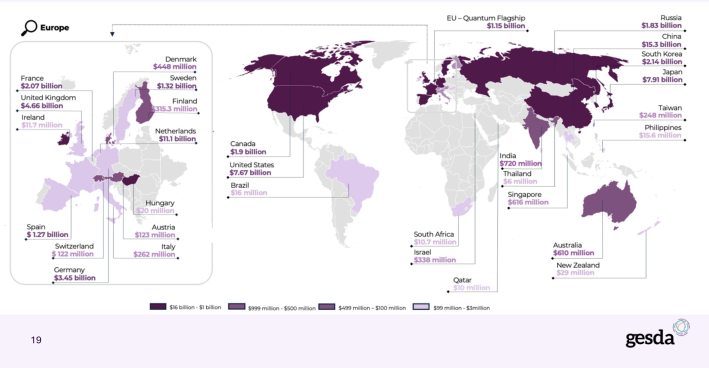
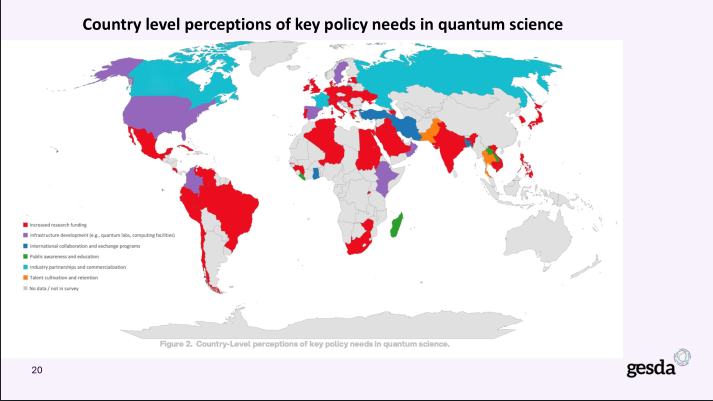 Countries realise what they need to pay attention to, and many know they have to invest. What’s the gap?
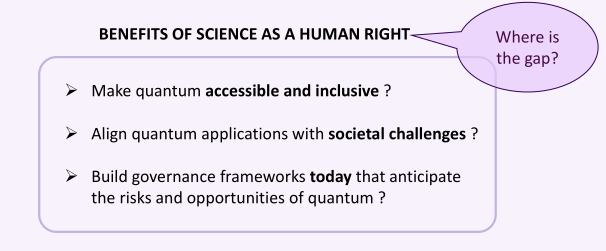 We have to make it accessible and inclusive but also align it with societal considerations so when this happens we are safe. Anticipating governance frameworks today is important as well. Is there apathy for this? Do people care?
The Open Quantum Institute
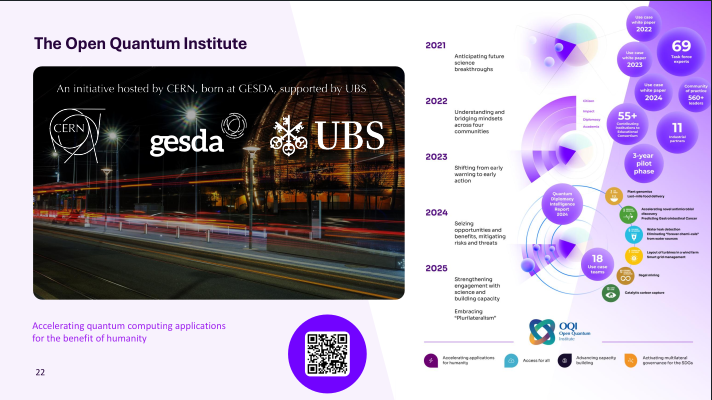 It is necessary to find a common language between policymaker and scientist, so the policymaker sees a digital divide that’s going to happen soon when it comes to quantum technology.
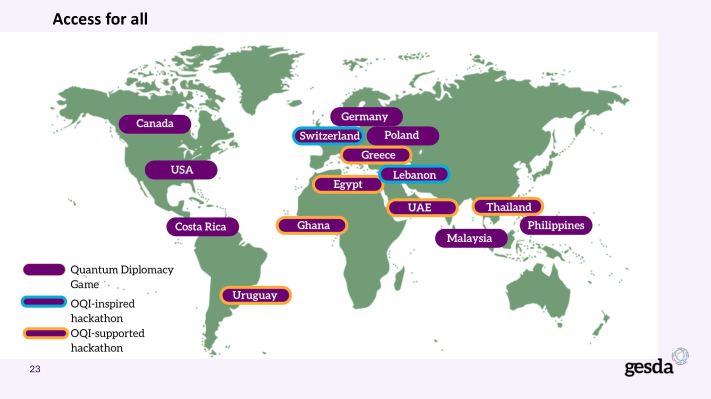
This way we see that if we share computers with countries on the other side of the map we can adapt them to other problems and make them more inclusive, so they are a better product. We have the computer+knowledge and they be useful to adapt and flexibilise it. But many governments don’t allow this for geopolitical stuff, because it lets them protect their assets. This is easier to overcome if it’s for a common good, the Open Quantum Institute conveys this.
A whole mindset of change is created. The project was handed over to CERN and the funding was obtained from UBS, this is good for them as they can know firsthand what happens in the field to invest. This project also focuses in access for all, creating a market and showing people what they can use quantum computers for.
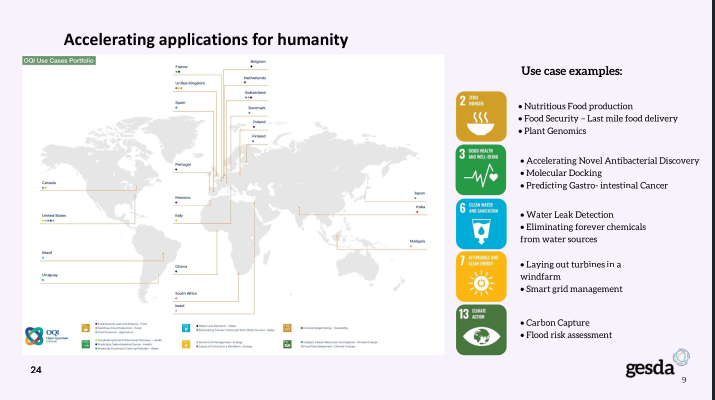
Quantum computers for the SDGs
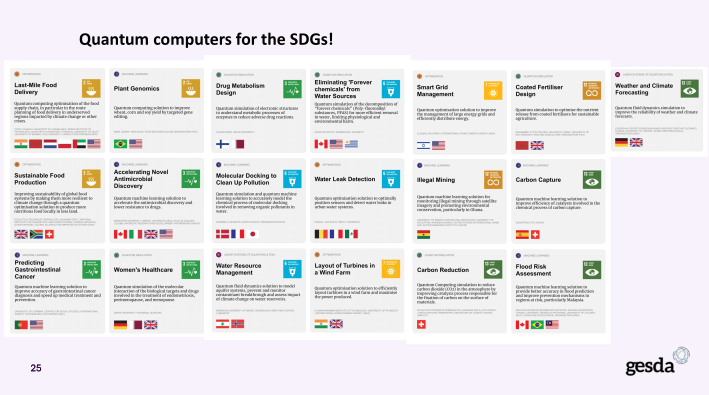 This was difficult, SDGs are not in scientists language or mindset→they don’t necessarily know about them. A part of this was choosing who was the best to work towards this so as to advance this science for the greater good.
Intelligence Report on Quantum Diplomacy in Action
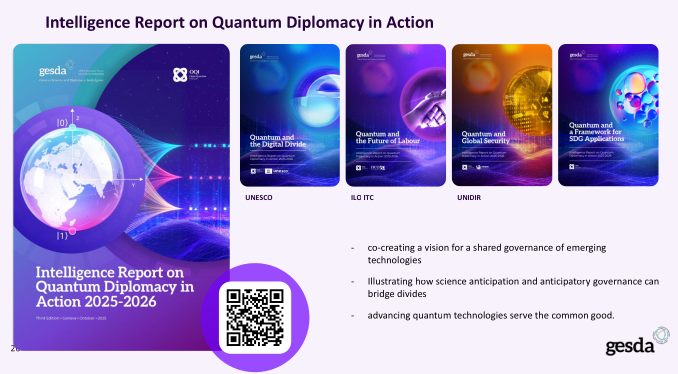 This initiative is a very interesting example of track 2 diplomacy. Experts talk between each others, science diplomats. On a side note, the OQI has briefed diplomats on many things like resolutions in the CoHR in Geneva about neural rights. Policymakers aren’t always informed, resolutions last for a long time (like 20 years in this case) and can get outpaced easily.
International Geneva: the strategic multilateral hub for global governance
Everything gets decided here, best place to permeate policymakers and be an actor of change.
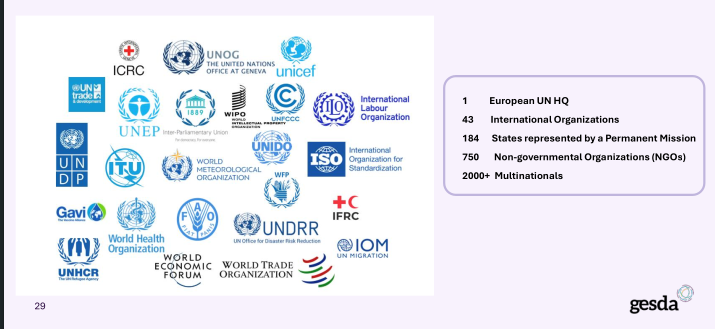 The ultimate client here, are governments. As it happens with most entities in IG. Here we mostly do soft diplomacy in private dinners f.ex. which is way easier in Geneva.
GESDA as an instrument of science anticipation in unique times
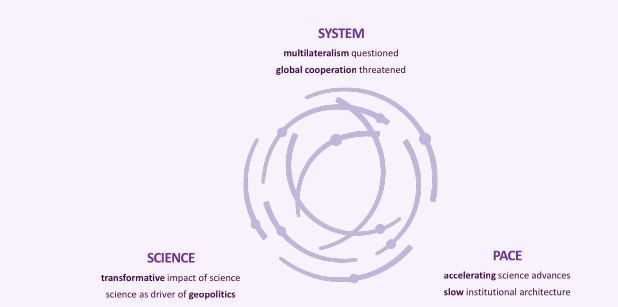 CH brings a lot to the table, good offices, amazing science… We can anticipate science progress by bringing actors together and accelerate the process of policy making. However, it is important to get the private sector in on this as well (they know the market) as civil society because without them they will fight back (like Greenpeace with GMOs). This last actor is more worried about ethical issues, health…
GESDA Radar
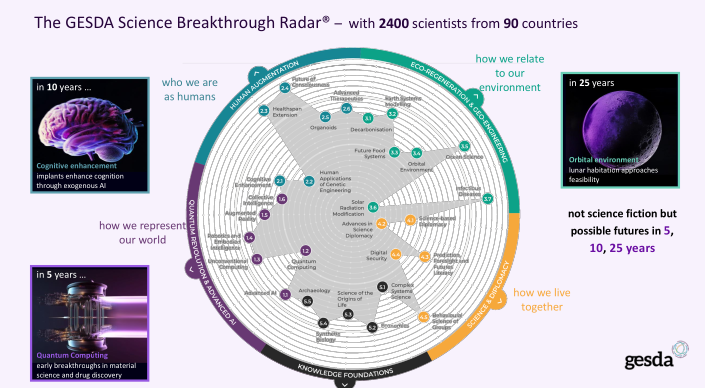 What is being worked on, to anticipate research.
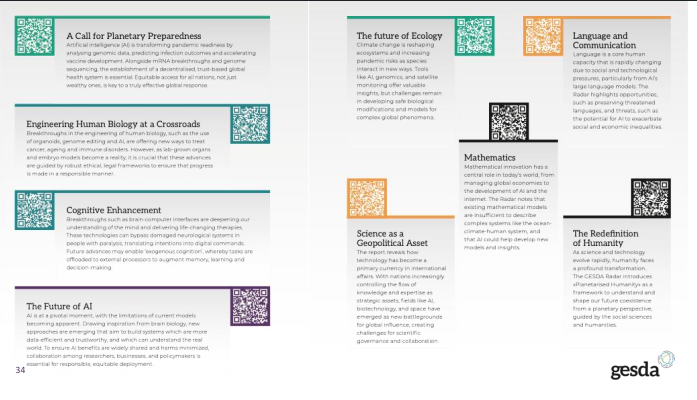 Topics are released regularly, here we have some new ones. And scientists opinions are here.
Summary
Connection with WTO.