Renewable resources
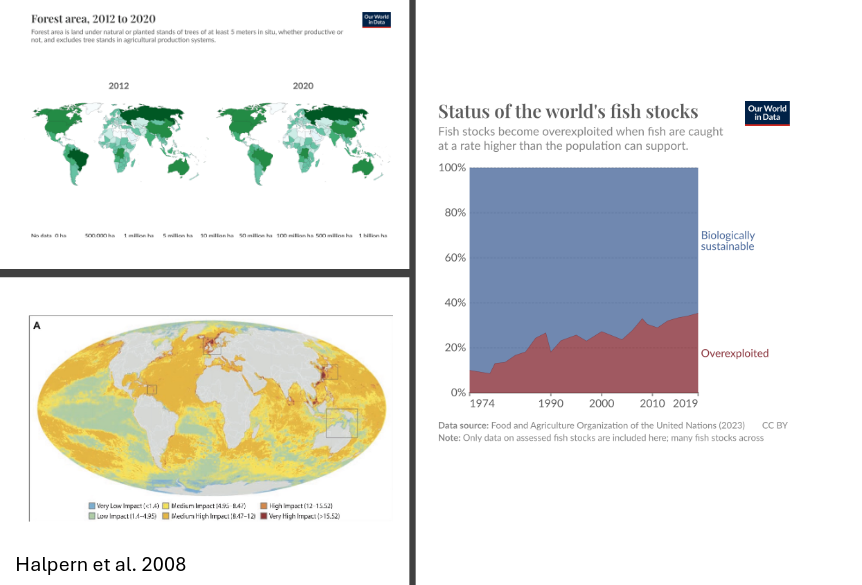
Loss of resources illustrated
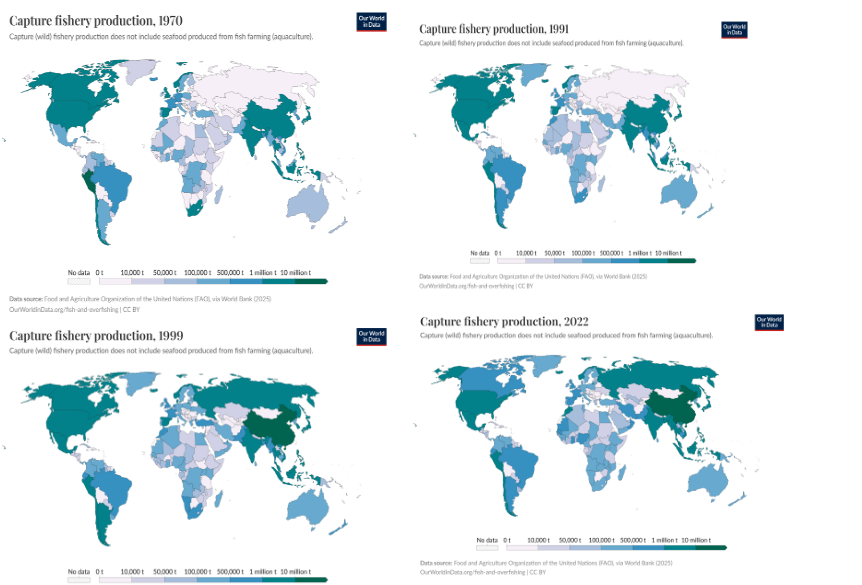
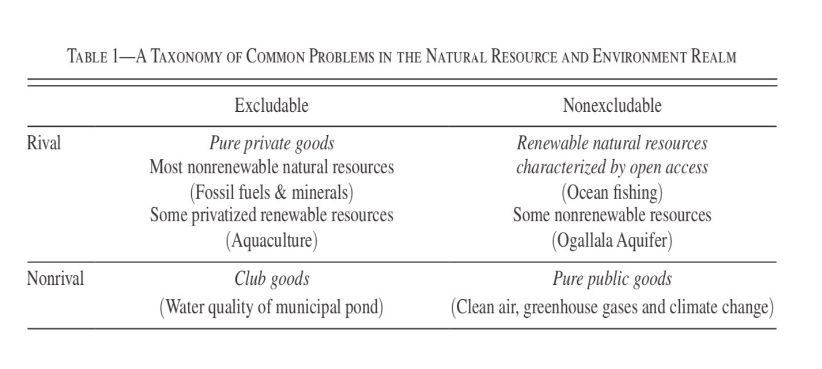
Natural resources as Commons
Modelling natural resources exploitation
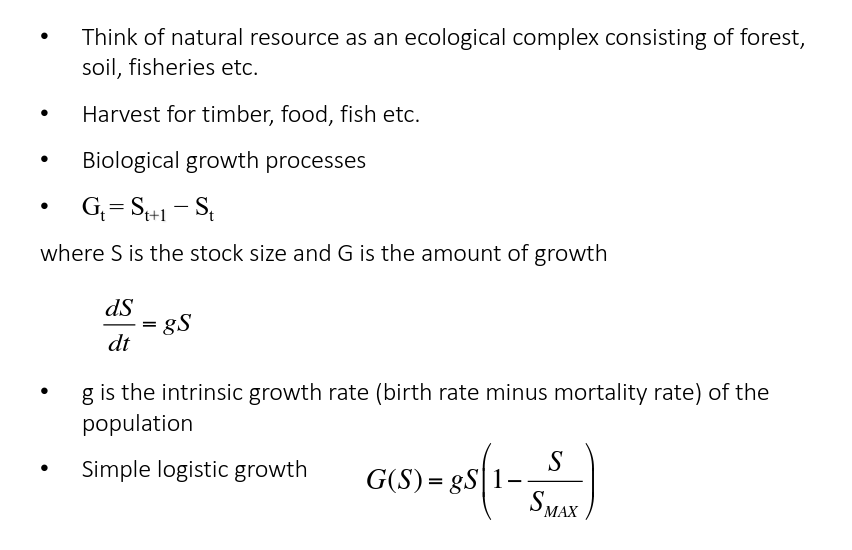
Resource Dynamics
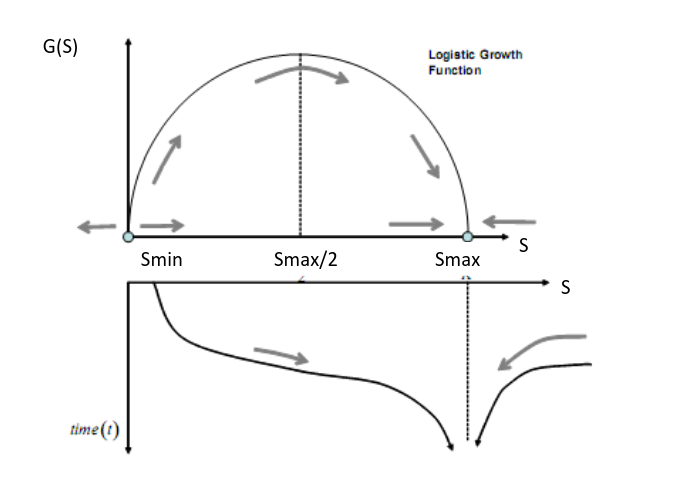
Resource stability
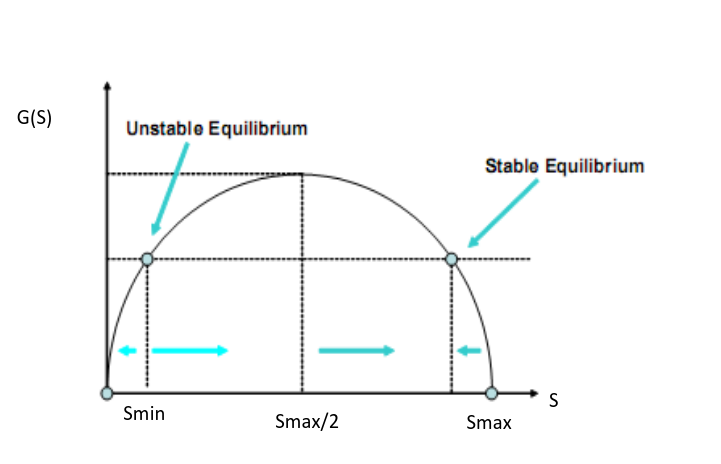
Biological Equilibrium
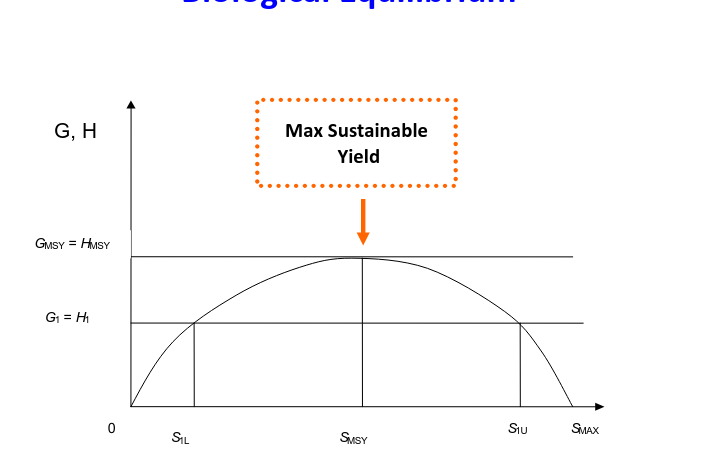
- Steady-state harvests: the amount of the stock being harvested (H) is equal to the amount of net natural growth of the resource (G) ⇒ G = H.
- Is the MSY an efficient outcome?
- Without knowing market prices or costs you can’t know, it’d be better to be situated around the stable equilibrium S1U.
Economic model of open access renewable resource
- A large number of price taker commercial units.
- Property rights on capital and resource caught.
- Free access: enter if profit is positive, leave if profit is negative.
- Cannot exclude the others from the resource or affect their effort level.
- No enforceable property right for in situ resources.
- If any agent chooses to leave some harvest to increase the stock, no right to the fruits of the investment.

Bioeconomic equilibrium (or steady-state) solution
- A biological sub-model, describing the natural growth process of the fishery.
- An economic sub-model, describing the economic behaviour of the fishers.
- The resource stock size is unchanging over time (biological equilibrium).
- The effort is constant with no net inflow or outflow of agents (economic equilibrium).
- Bioeconomic equilibrium: G=H
- NB = B – C = 0
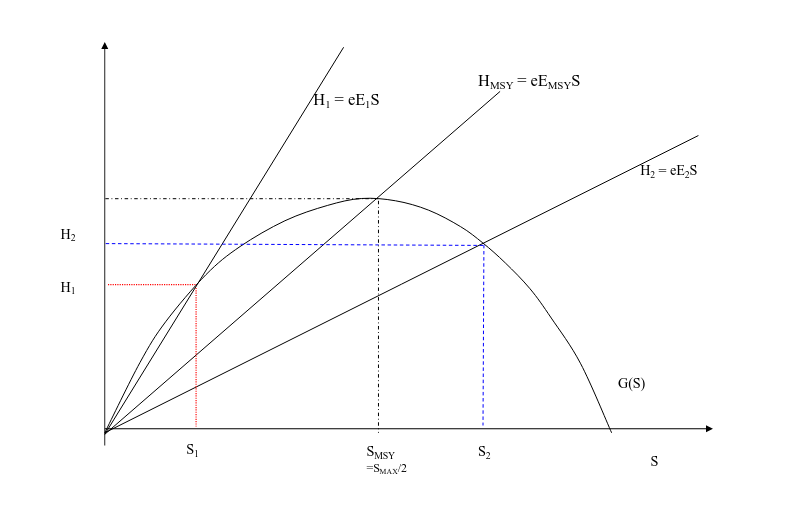
- Assume Harvest depends on effort and stock.
- H=H(S,E).
- H= eES.
- e is a technological coefficient.
Harvest - stock space
 Some resources are uncertain and as such policies will probably be unsuccessful.
Bioecon Equilibrium: Harvest - Effort relationship
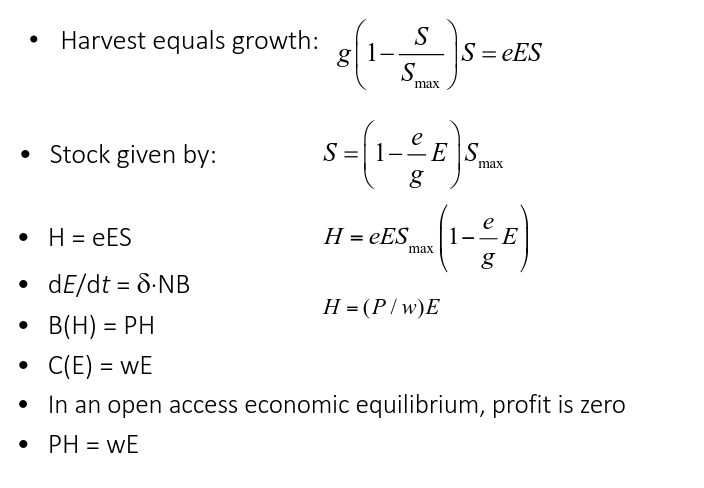
Harvest effort space
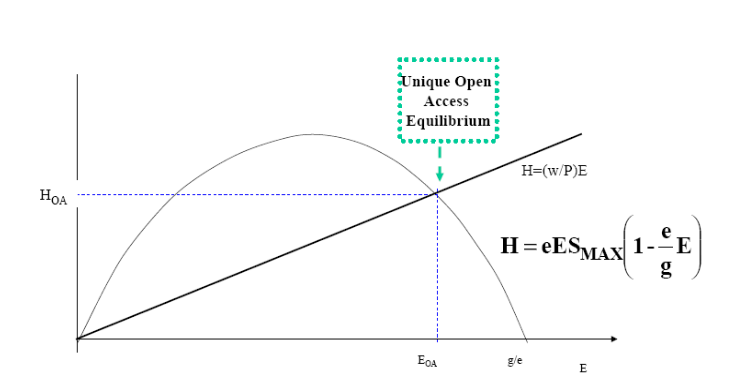
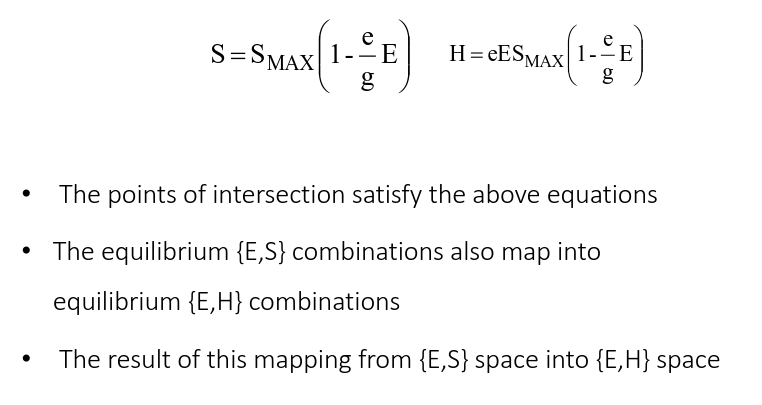
Economics of overexploitation
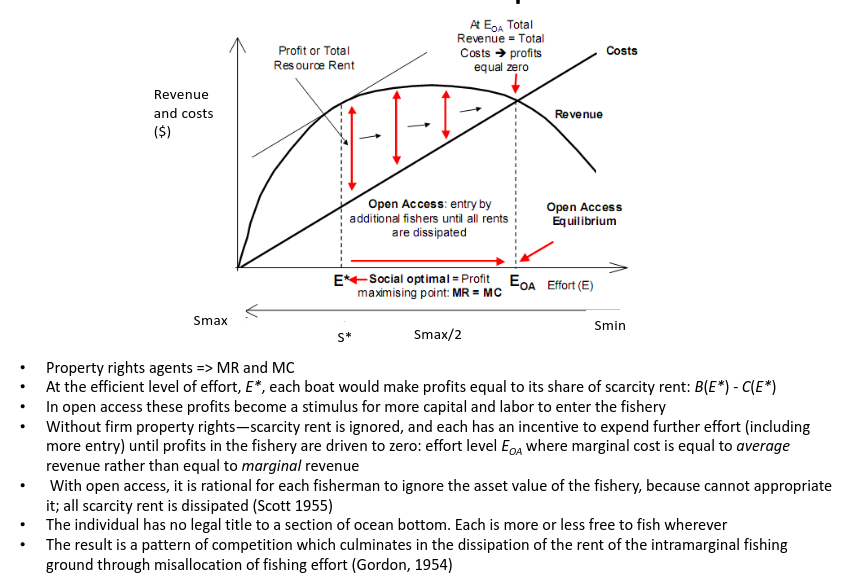 Once we get to the equilibrium stock is low. E* is the best solution for society, fisher is happy as well as conservationists. You maximise your own personal welfare and society’s.
Dilemma
In an open-access, firms exploit available stocks as long as positive profit is available • While this condition persists, each agents has an incentive to max its harvest • Dilemma for the individuals and for society • Economic agents: the resource is perceived as being overexploited • For example: each boat owner pursuing maximum profit ⇒ the collective efforts of all drive profits down to zero
- Social: the resource will be economically ‘overexploited’
- Resource stock level may be driven down to levels that are considered to be dangerous on biological or sustainability grounds.
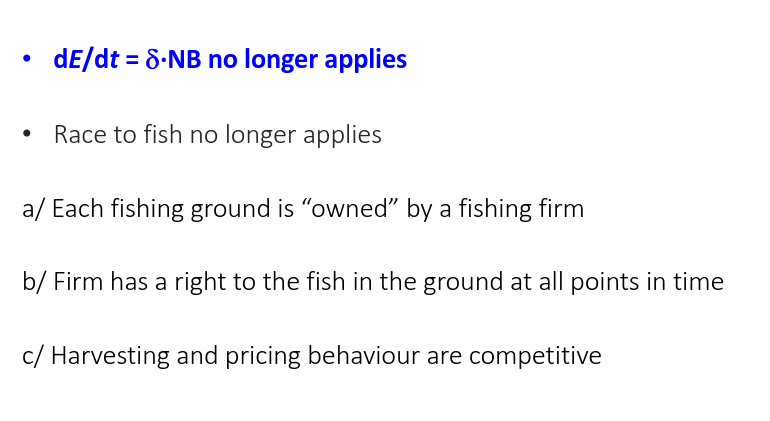
Property rights change the economics of the common problem
Why do we observe overexploitation
Non excludability • open access ⇒ agents with or without permission to use resources as much as they can catch due to limited monitoring and enforcement activities • Resource management can also include “regulated open access” • However, the property rights problem is not being addressed sufficiently and the race to exploit is still on
How can the tragedy of the commons be overcome?
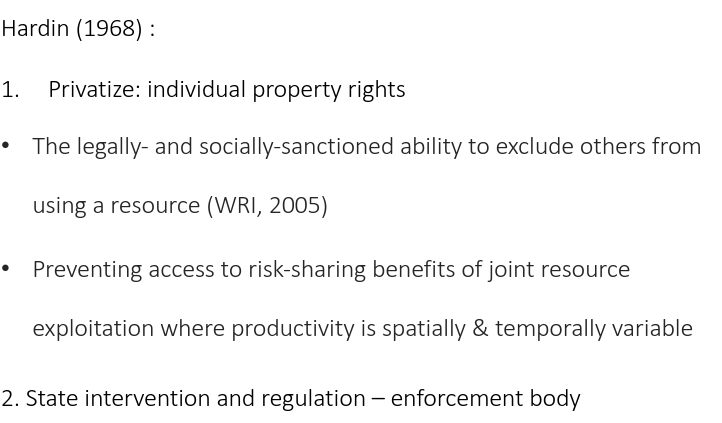
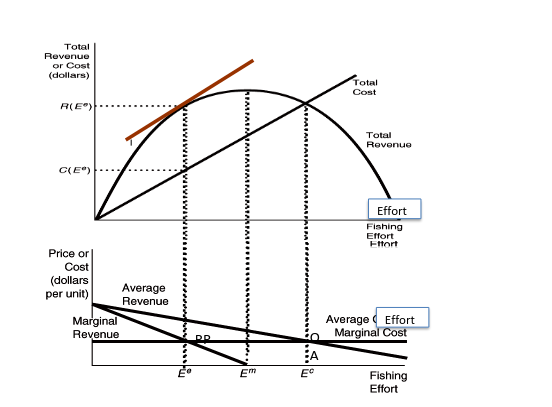
MR=MC
- PP uses less effort than OA.
- Higher harvest.
- Private property equilibrium is superior both ecologically and economically.
- Aligning private and social objectives of multiple-use resources (fisheries, forests, etc).
A tale from the EU fishery policy
- Reduce effort toward some target {H/E = eS}.
- Initial strategy: Limit number of licenses, require each vessel have a license.
- Industry response: Larger, faster, more powerful vessels;
- Regulator reply: Limit vessel characteristics (length, horsepower, gear, etc.).
- Industry response: Fish more intensively—more days per year, more hours per day, use larger crew, more complex fish-finding technology.
- Efficiency effects: Technology constrained, not efficient, no innovation.
- Regulator reply: Limit season length (few days per year) Industry response: more fish finding technology, freezing.
- Didn’t adress the core problem of why there is oversfishing→property rights.
Race to the fish
- Congestion and dangerous conditions on fishing grounds.
- Most of catch is frozen.
- Excessive processing capacity.
- Fish during dangerous weather (‘Deadliest catch’).
- Excessive bycatch.
- ‘Ghost fishing’ by lost gear.
- Use tenders to avoid runs back and forth to port.
- Overcapitalization and overfishing.
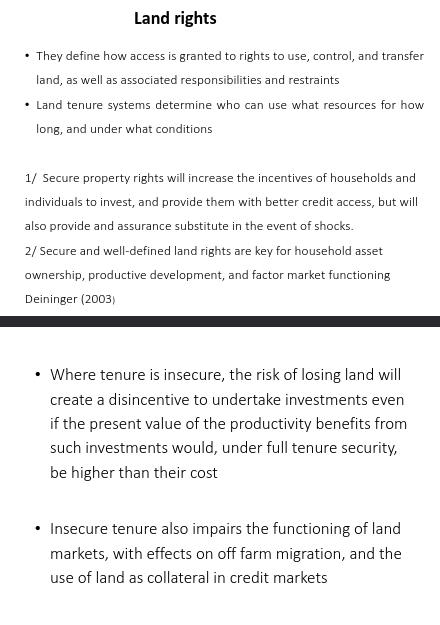
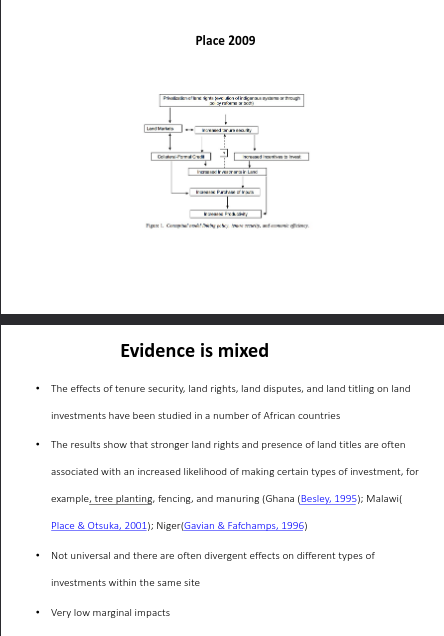
Land rights
‘Individual transferable quota’ (ITQ) system
- Scientists assess current and potential stock levels, and determine a maximum total allowable catch (TAC).
- The TAC is then divided among fishers.
- Each fisher can catch and land up to the amount of the quota it holds. Alternatively, the ITQs that an operator holds can be sold to others.
- No entitlement exists to harvest fish in the absence of holding ITQs.
- Since quotas are valuable, transferable quotas will command a positive price.
- fishers who own quotas, but have high costs, can make more money by selling their quotas to fishers with lower costs and vice versa.
- Both the tax system and the ITQ system encourage lower harvest rates in an efficient manner.
- The distribution of rent from a quota system depends on how the quotas are initially allocated.
- If the government auctions off the quotas, the government appropriates all the rent and the outcome is similar to that of a tax.
- If the government gives the quotas away, the fishers can then trade among themselves and the rent goes to the current generation of fishers.
- New entrants would have to purchase quotas from existing fishers.
- The price of the transferable quotas will rise to the point at which it equals the discounted market value of future rents.
- Future generations and quota system.
- They have to pay to enter the industry.
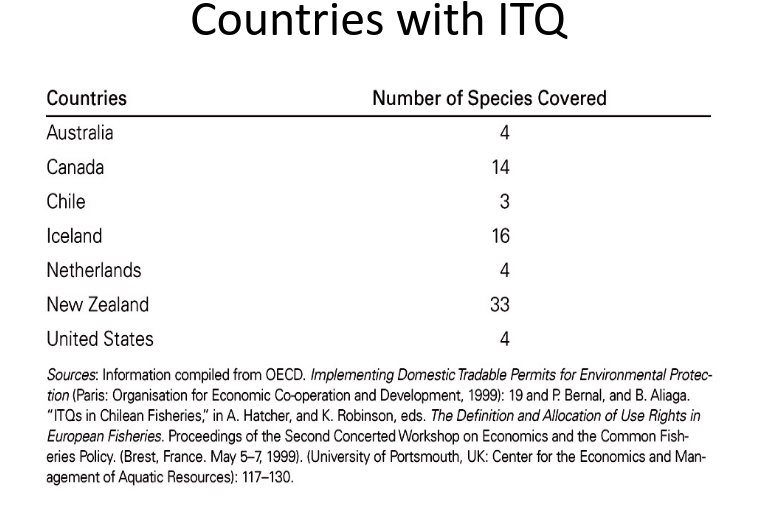
Countries with ITQ