Rio
Already existed in some legislations (e.g. DE or CH) by the 70s but was codified universally with Rio in principle 15.
Principle 15
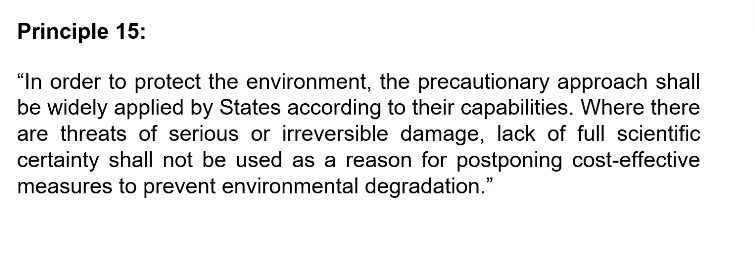 It distinguishes between precaution and prevention. Precaution is anticipating environmental risks, even if both want to prevent transboundary harm. But they are not so similar, as you cannot invoke them in the same context: Scientific certainty (prevention) vs. uncertainty (precaution). You can only invoke precaution then!
A bit weird in formulation:
- Full scientific certainty→does that even exist?
- Threats of serious and irreversible damages→how do we know if there is scientific uncertainty?
Since 1992 with Rio this has been incorporated in many treaties in IEL.
Convention on Biological Diversity of 1992
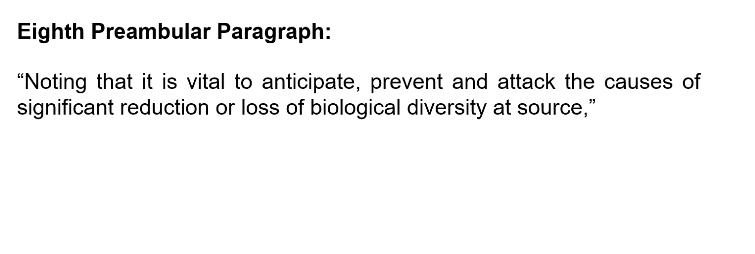 Anticipating the causes of biodiversity loss, from the preamble.
UNFCCC
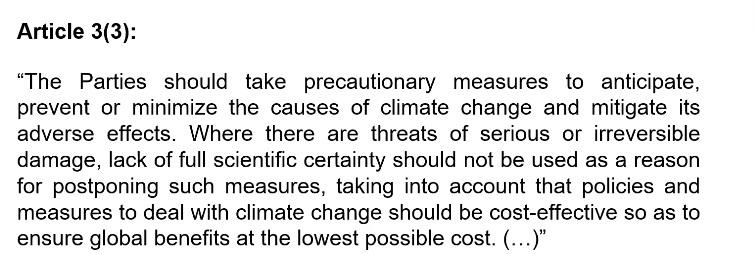 Precaution is at the heart of the UNFCCC.
Fish Stocks Agreement of 1995
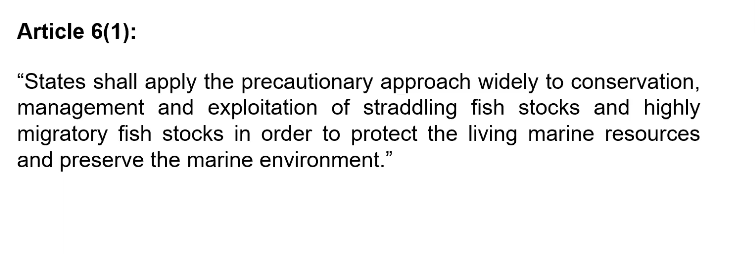 Calls for the application of a precautionary approach to conservation of fish stocks.
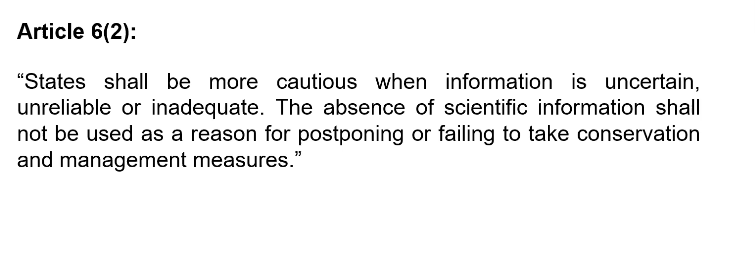 Maybe what article 15 of the RD should have been.
Cartagena Protocol of 2000
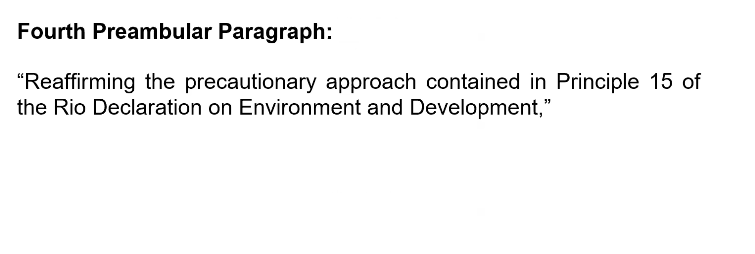 Reaffirms what is already in the RD.
Is this principle customary?
Implemented in many instruments, we have seen hard law treaties… so is it?
WTO Apellate Body: Hormones (US 1998)
First dispute about the status of this principle. US and Canada vs. EU which restricted import of beef with hormones to its market, to then defend itself using the precautionary principle→IEL justified (allegedly) its trade restriction. Canada and the USA responded by reaffirming its status as an approach not a principle.
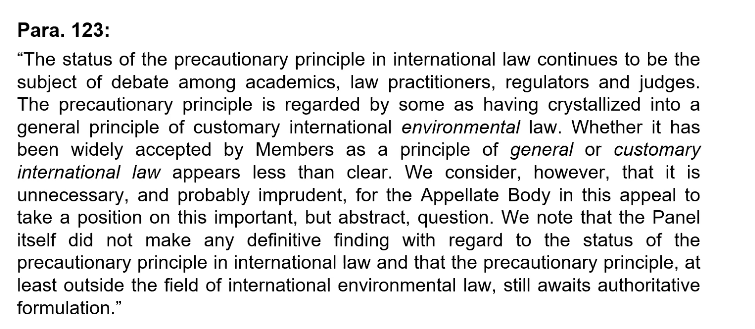 Admit lack of consensus and says that it isn’t clear whether it’s a principle of general IL, but that it is the case for IEL… creating a fragmentation in IL(?). But it doesn’t get into answering this problematic about its influence outside of IEL.
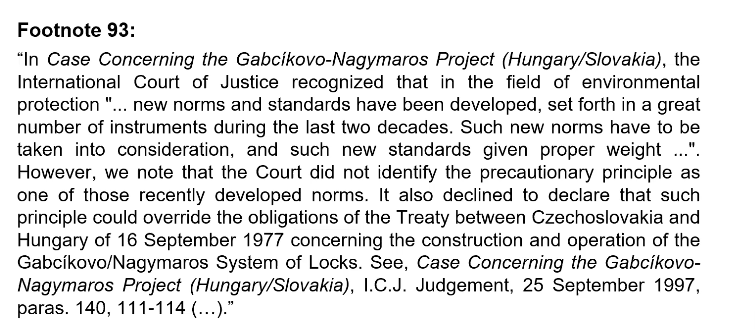 It justifies itself using the Danube dispute award from the ICJ, which didn’t mention precaution. Hungary pleads precaution and gets ignored.
Pulp Mills on the river Uruguay on 2010
Argentina used precaution against Uruguay, while also alleging that precaution is customary and reverses the burden of proof: the person who alleges the fact doesn’t have to prove it. Therefore Uruguay would have had to prove that the pulp mills weren’t dangerous. This normally isn’t the case in law.
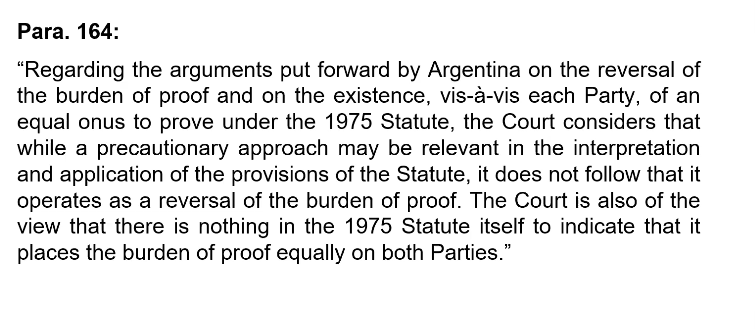 The court said no. Although more progressive than the Danube dispute, assumes it could be relevant (doesn’t totally ignore, although doesn’t say it’s customary) but it doesn’t entail this reversal of proof anyways (or that the burden would be shared equally either). Argentina lost.
ITLOS Advisory Opinion on responsibilities and obligations of states with respect to activities in the Area
Only time when an universal tribunal decided to recognise precaution as part of customary international law.
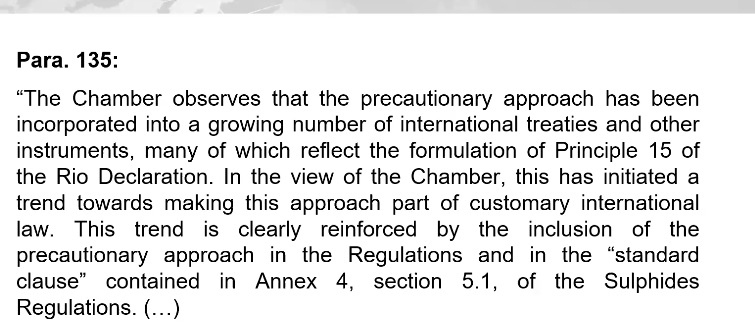 Observes the evolution and usage in treaties aligned with the RD (principle 15). For the chamber therefore there has been an initiation of a trend towards making that approach part of customary international law.
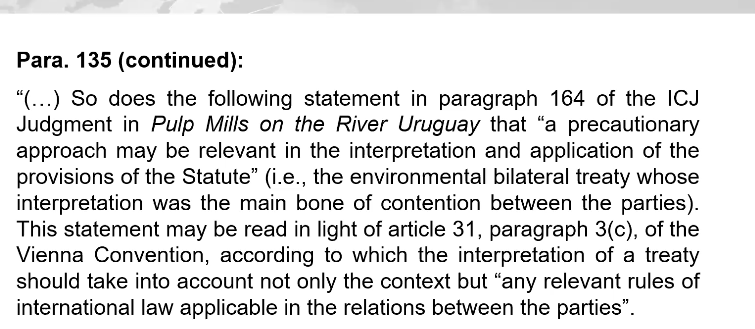 And it even uses the pulp mills case to justify itself, saying they recognise it may be relevant for IEL which was kind of false but whatever. Courts are shy and want to justify themselves… they were alone at ITLOS on this one though.
Courts of HR
Interamerican
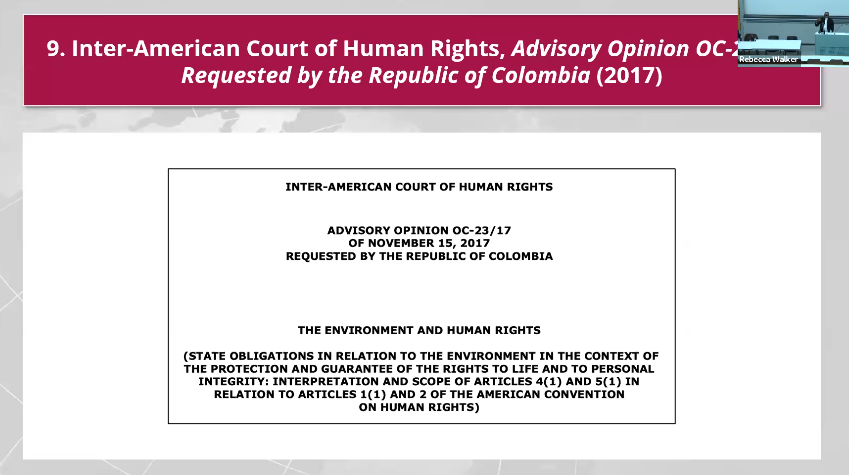
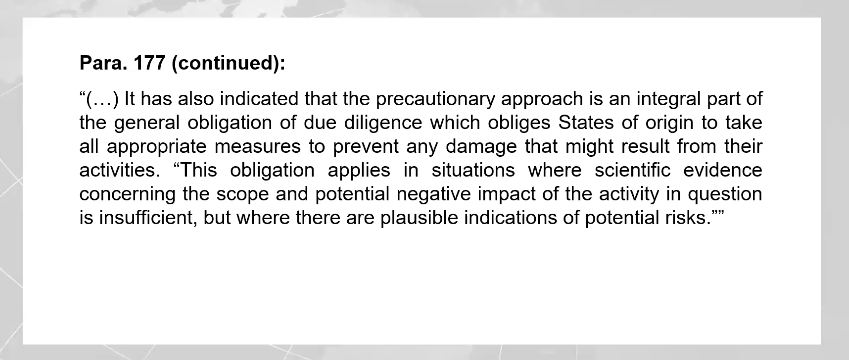 They said no precaution=no respect of HR and that precaution is customary. Regional courts are often more progressive than universal ones as we can see.
Anti-precautionary principles
Proceed at your own risk
Pakistan vs. India at PCA Indus Waters Arbitration of 2011. Basically recognises as customary this principle: a country can proceed while being responsible (liable) for the consequences if after things are found to be illegal (after interim phase/judgement f.ex.).
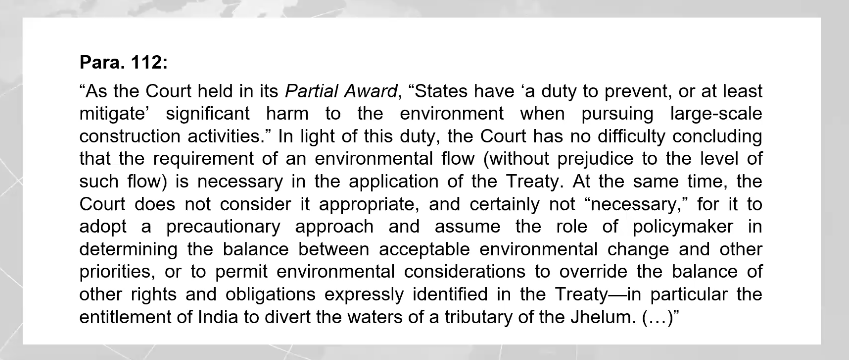 Tribunal says it is not a lawmaker and that if states want new principles like precaution they should work on that, but not their jobs… contentious opinion.
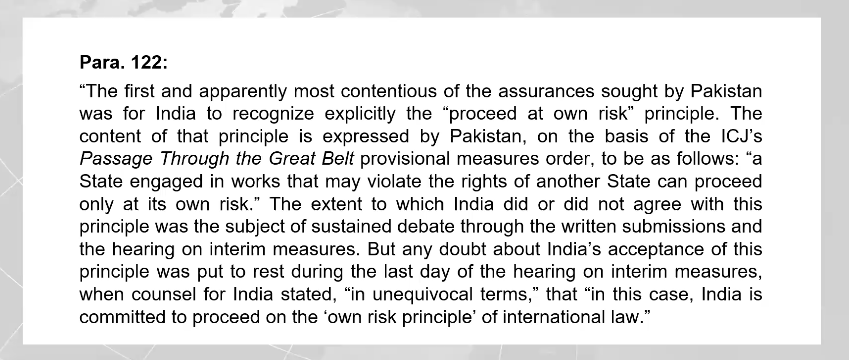 So recognises (because of India which was agreeing with Pakistan on) proceed at your own risk (for now, case was still to be judged completely).
ICJ
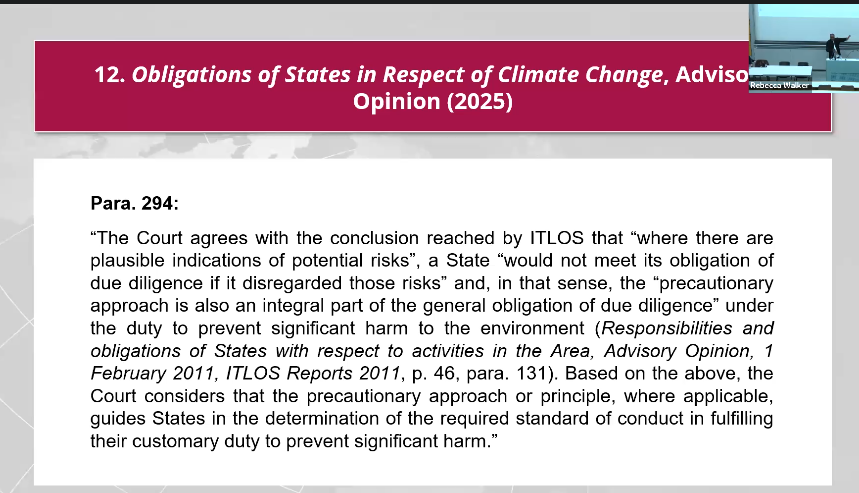 It does recognise (agreeing with ITLOS) that precaution is part of due diligence, which states don’t want… they only want it to apply for scientific certainty. The title/header of the section is precaution principle/approach… so still unclear. But does that really change something? Like in Iron Rhine the language suggests this should cause changes in behaviour through IEL so, that says more than nomination.
Gaps
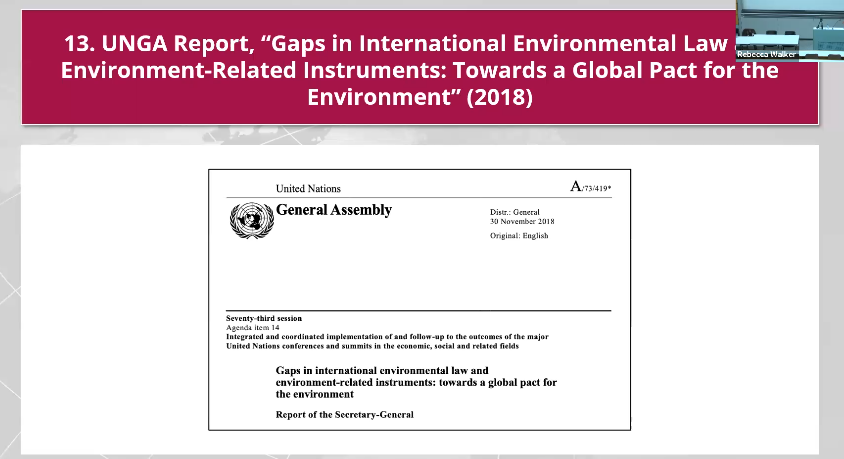 Still many in IEL (meaning, status of stuff, etc…) as we can see in the report of the UNGA. We can’t protect the environment like this.