Trade Cooperation
Economics of trade
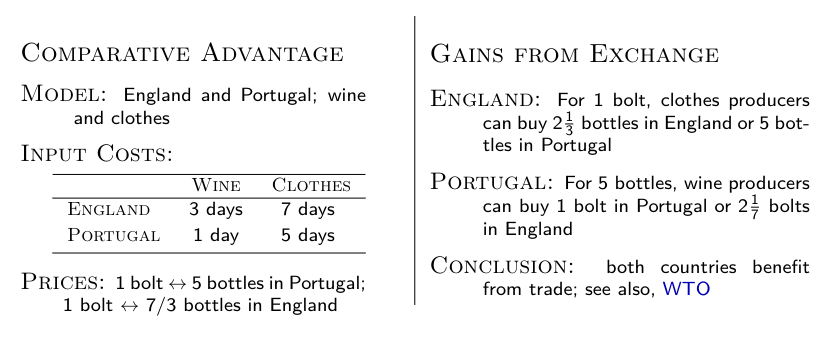 Great economically but disruption and structural changes in the labour base (some people lose their jobs, need to switch) and self-sufficiency concerns from a security standpoint for some.
The reality
Example
Questions
- Why is free trade so difficult to achieve if really everyone benefits?
- When does free trade increase and when does it collapse?
- Which countries trade more and which ones less?
Mercantilism / Nationalism
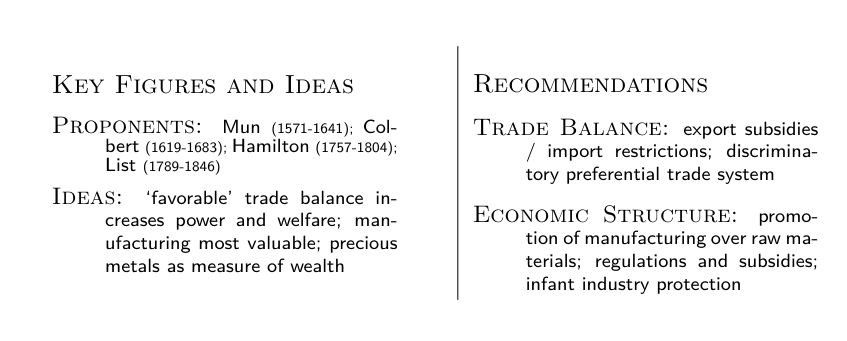 Mercantilism is born because with unified nation-states we know have an expression of sovereignty when it comes to controlling trade in and out of the borders. Secondly, there was a struggle for economic power between big empires / powers (e.g. Britain vs. Spain).
Example
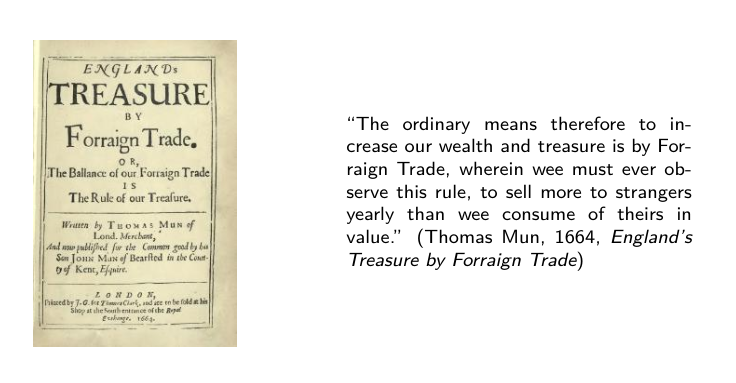
The rise of liberalism
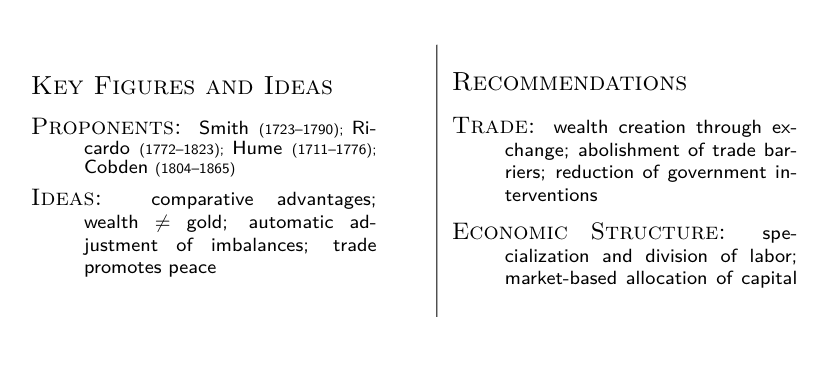 Critique of the gold standard, having more gold doesn’t equate to being wealthier. Gold is only useful if you use it, but just having sitting around means you are under consuming. At best, it’s a metric of how much you can consume.
This is a positive sum world, not a zero sum one like with mercantilism.
Example
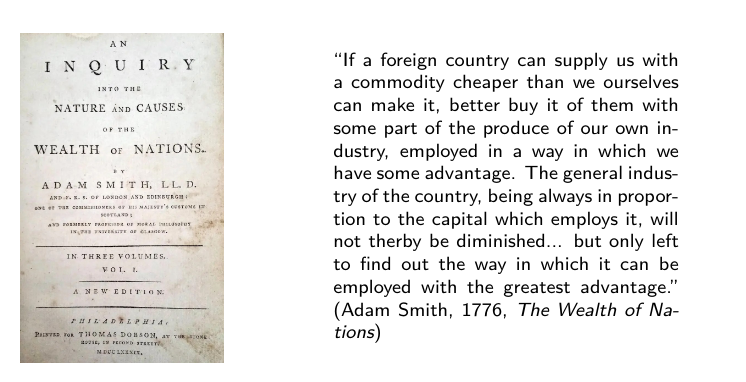
Liberal ideas in action
From the perspective of constructivism one could study the way in which Adam Smith’s liberal theories influenced Great Britain at the time. You could also make the point that Britain was already experimenting with free trade and it was onlyy the Napoleonic wars that temporarily put a halt to this.
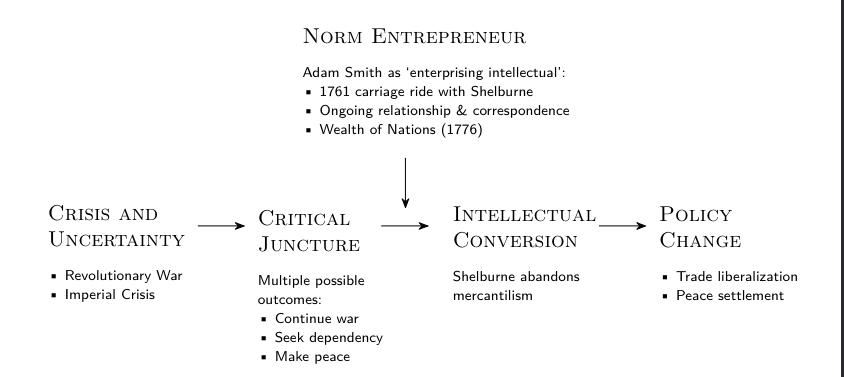 The dependent variable is policy change. When a crisis emerges there is a critical juncture, a choice must be made and the policy used up to that moment is changed in an intellectual conversion (mental shift in the policymaker) which leads redundantly to a policy change. A norm entrepreneur is necessary for this.
Mercantilism strikes back
 You even have examples of protectionism nowadays (e.g. Infant business policies that protected Airbus until it became competitive).
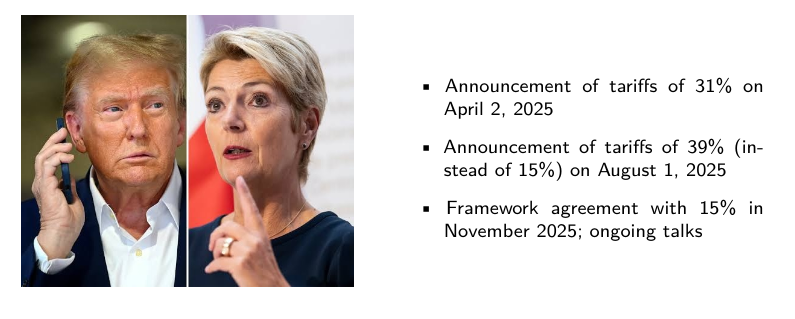
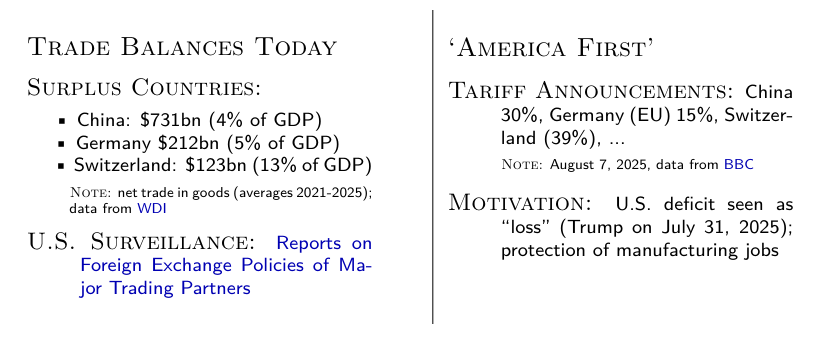
The USA has always surveilled their trading partners trade policies and have, like others, returned to a zero sum perspective on the matter.
Having a positive trade balance is a net surplus but also makes a country dependent on its exports and kind of vulnerable in that sense. Additionnally such a country consumes less than it could and therefore hoards money. In our case, Switzerland has a 10-15% surplus in trade balance.
The cooperation problem
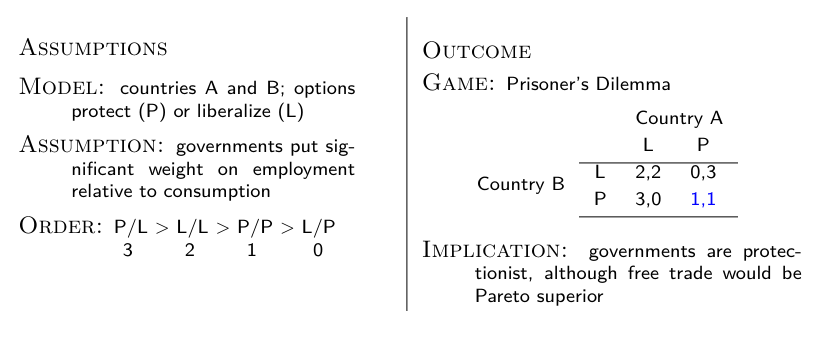 Scenario 3 being the most beneficial for the country creates a trade war as it causes their trade partner to react with protectionism. It isn’t an equilibrium.
Solution 1: Power
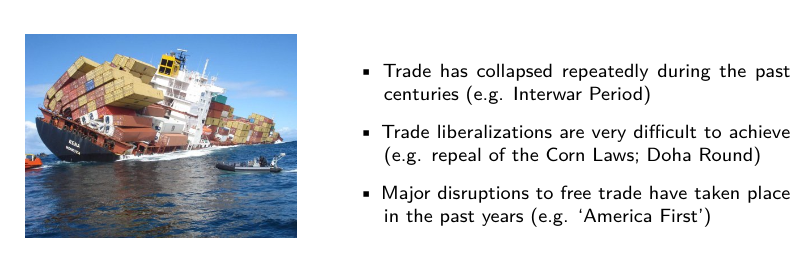
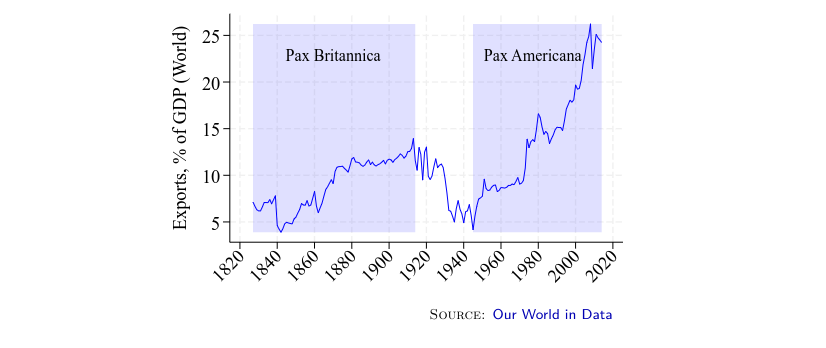 The economy was very closed after the Napoleonic laws (we saw this in Week 1-International Economic System: Corn Laws, etc.). Before the First World War there was a peak in international trade in 1913. The real collapse however, happened after the Great Depression. After the Second World War, only then, trade increased again.
A hegemon facilitates the maintenance of a liberal international trade order.
Hegemony
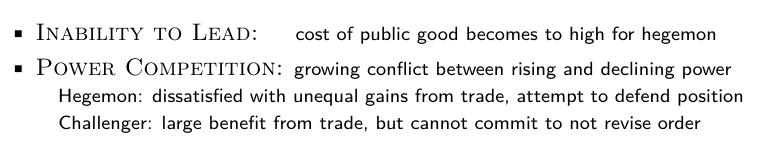
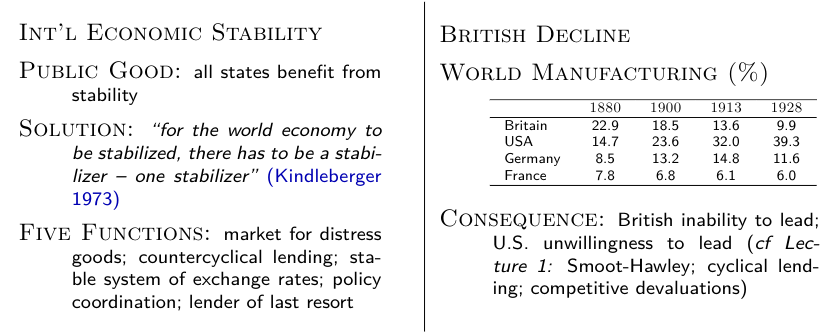 All states want to benefit from this stability, but no one wants to pay the expensive price of maintaining it. With the biggest economy, the hegemon reaps the biggest rewards.
Challenge: power transitions
Example: the rise of China
Solution II: institutions
GATT / WTO
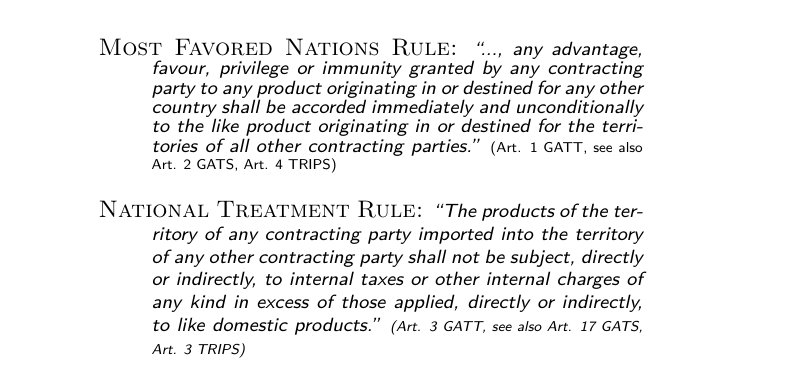
Key rules
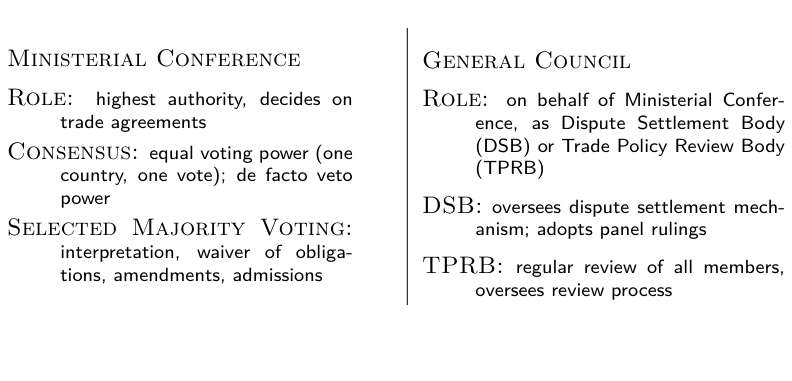
Main WTO Organs
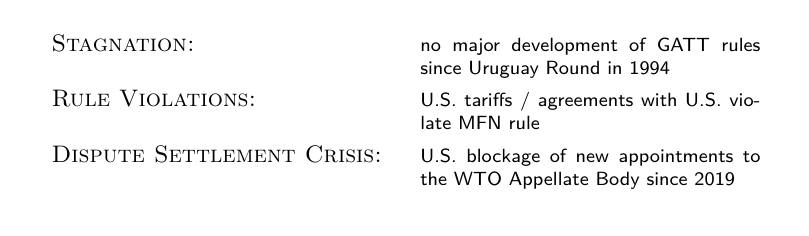
WTO under pressure
Conclusion
