Monetary cooperation
Reminder: History
As seen in Week 1-International Economic System.
- Pre-1914 Period: Gold Standard.
- Interwar Period: Return to Gold and collapse.
- Post-1945 Period: Bretton Woods and collapse.
- Post-1973 Period: Hybrid (‘non-’) system.
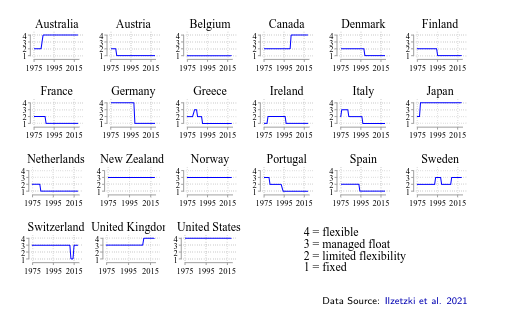
Exchange rate regimes, 1975-2020
Gold standard mentality
Beliefs among elites
- Gold Standard = stability, civilization, morality. Abandoning gold = chaos and social disorder.
- Adjustment through deflation, not devaluation: raise interest rates, cut wages, no monetary/fiscal stimulus
Result
Procyclical policy turned 1929 recession into a depression
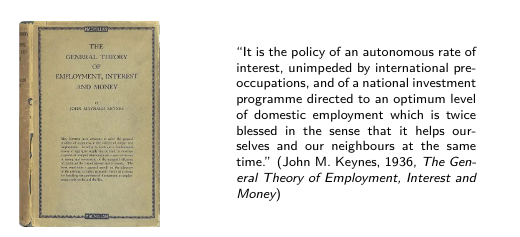
Keynesian critique
- Observation: persistent unemployment, commercial competition in 1920s/30s.
- Interpretation: failure of internal adjustment; harmful use of tariffs as alternative.
- Conclusion: Gold standard as “barbaric relic”; prioritize internal over external stability; use monetary flexibility.
Example
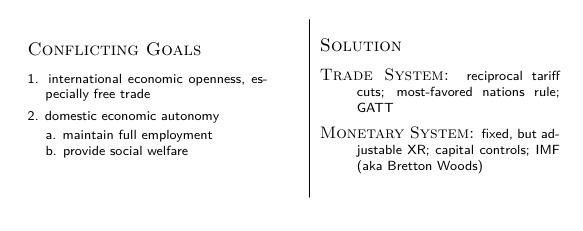
Postwar embedded liberalism
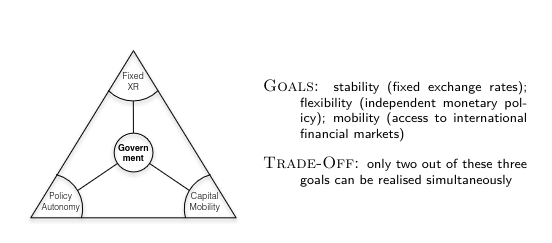
The (Impossible) Trinity
Monetarism and RBC
- Monetarism: money supply as key driver of inflation; temporary real effect of monetary stimulus, with risk of stagflation.
- ‘Real Business Cycles’: technology drives fluctuations in growth; ineffective monetary policy due to rational expectations.
- Conclusions: limited policy interventions; no ‘fine tuning’; focus on price stability.
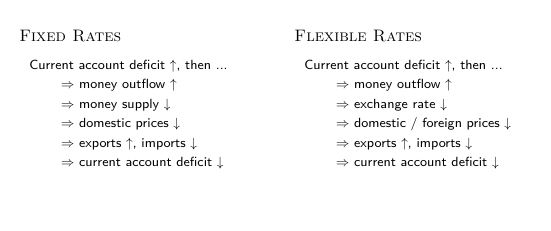
Who adjusts?
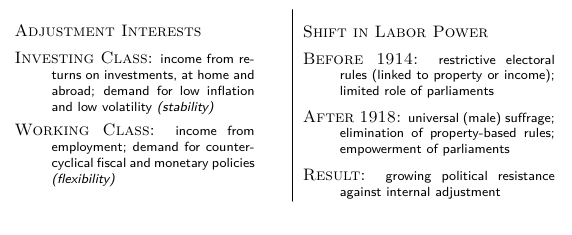
Class interests
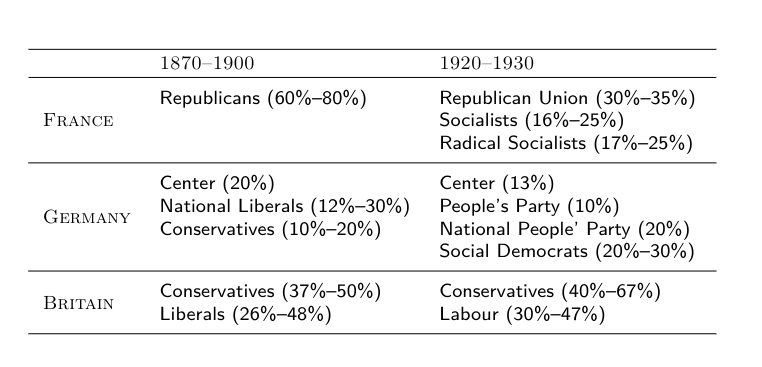
Parliamentary Representation, 1870-1930
Government partisanship
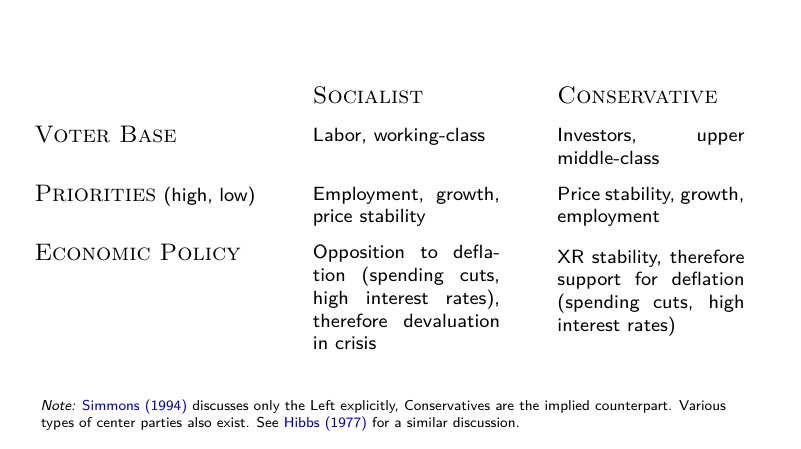 Who was in power affected how long a government was prepared to stick to the gold standard in the interwar period.
Interwar period examples
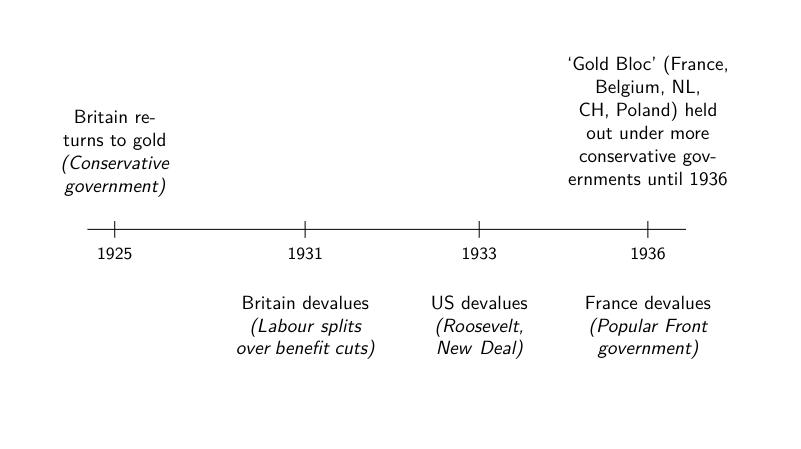 According to Keynes return to gold standard contributed to british stagnation in the 1920s.
Sectoral interests
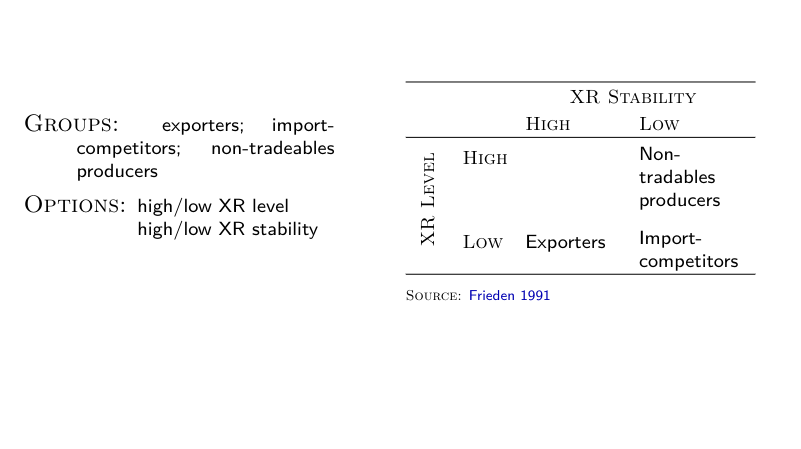
Challenges
Competitive devaluation
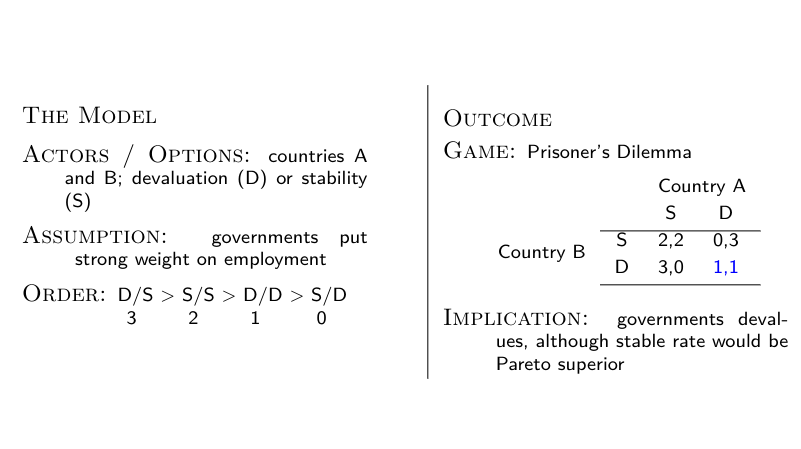
Solutions: institutions / IMF
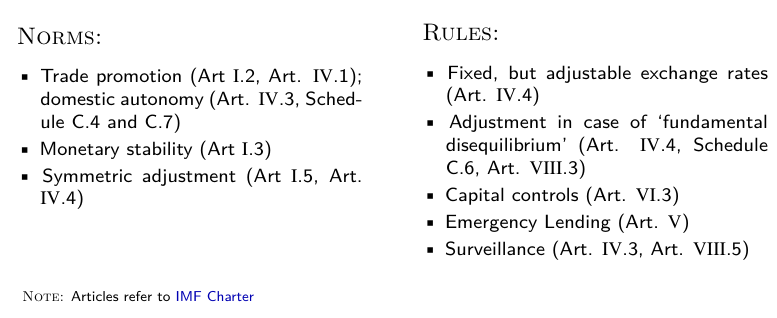 We see keynesian ideas in this charter.
Phillips curve
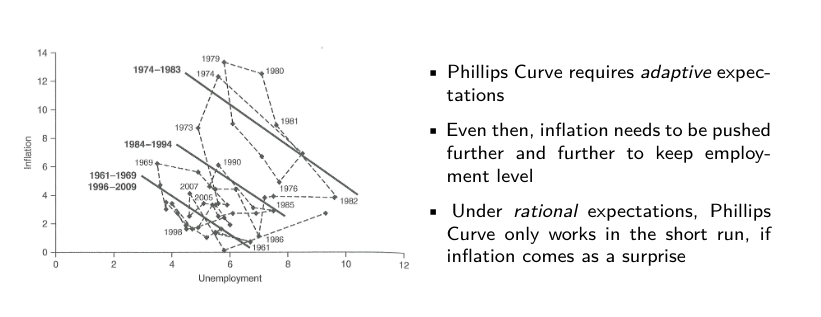
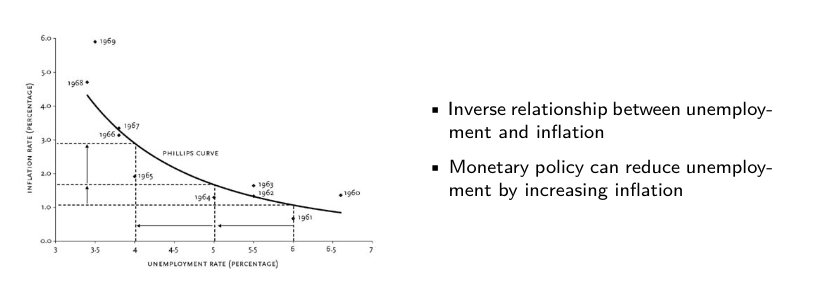 Inverse correlation between inflation and unemployment. Doesn’t work because of rational expectations.
Breakdown of the PC
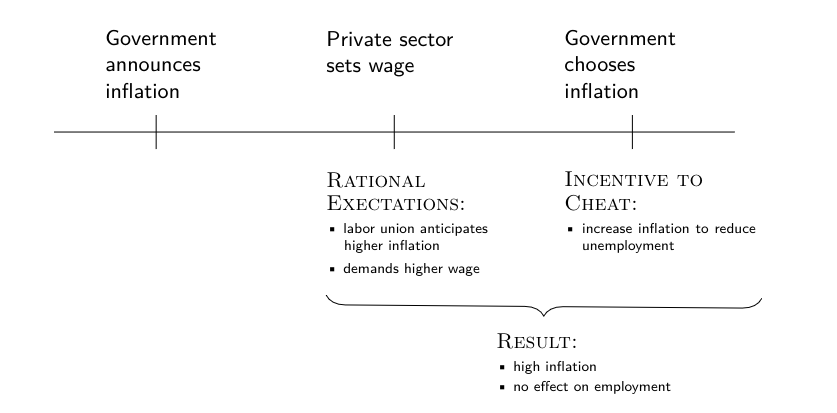
Phillips curve revisited
Solution: institutions/rules
- CB Independence: delegation of monetary policy to a ‘conservative’ central banker; prices stability as primary objective.
- Fixed Rates: peg currency to country with high monetary credibility; costly commitment to monetary stability; easily observable.
Conclusion
- Democracy requires (some) monetary flexibility.
- Shift away from ‘fine tuning’ towards price stability focus.
- Institutions solve monetary cooperation and credibility problems.