Globalisation
Anti-globalisation movement
- 1980ff: growing critique.
- 1999: spotlight on ‘Battle of Seattle’.
- 2000-2007: regular protests at WTO, IMF, World Bank, G8 meetings.
- Post-2008: anti-Wall-Street / anti-austerity protests; populist party success.
Two (interrelated) critiques
- Inequality: wealth gap (within / across countries); economic dependency; power asymmetry; environmental justice; ‘race to the bottom’.
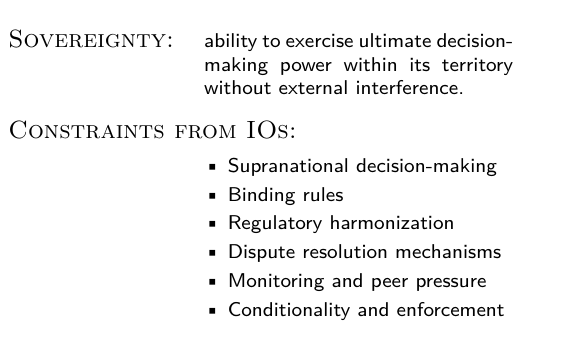
- Democracy / Sovereignty: loss of democratic accountability; IO influence / transparency; corporate influence; policy constraints (see ‘race to the bottom’).
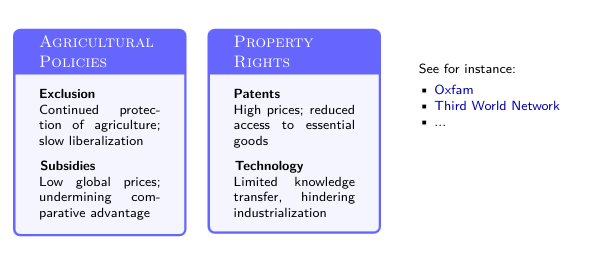
Critique: unfair trade
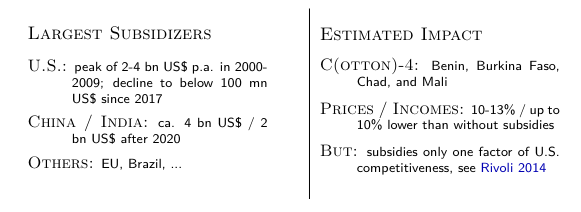
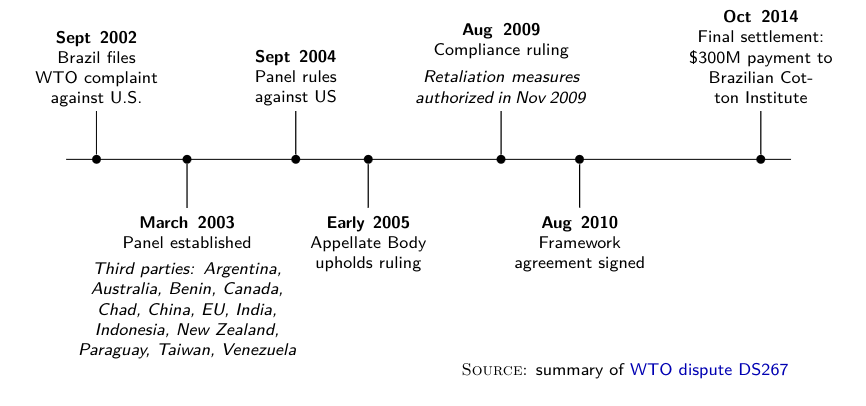
Example: cotton subsidies
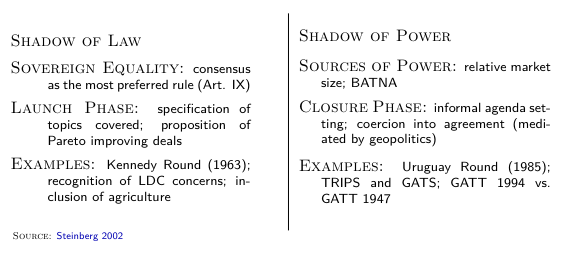
Example: GATT rules
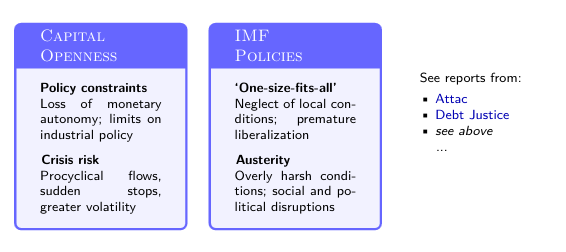
Critique: crises and adjustment
Example: Asian Financial Crisis
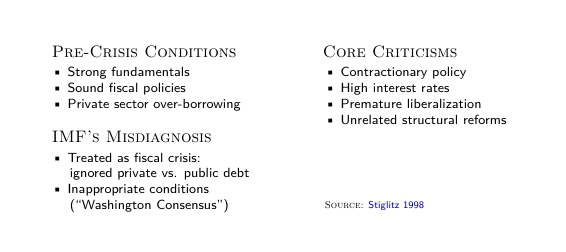 Counterexample of malaysia which put into place capital controls and didn’t use higher interest rates. The IMF inevitably has a difficult job because it always comes into play during a crisis, the question is whether it makes things worse or better for the pertinent economies.
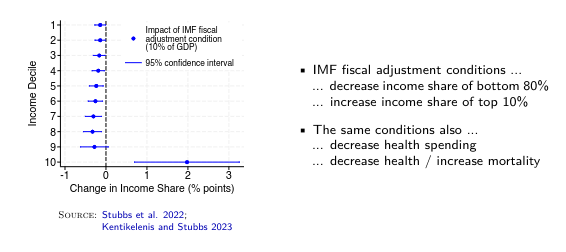
Example: a thousand cuts
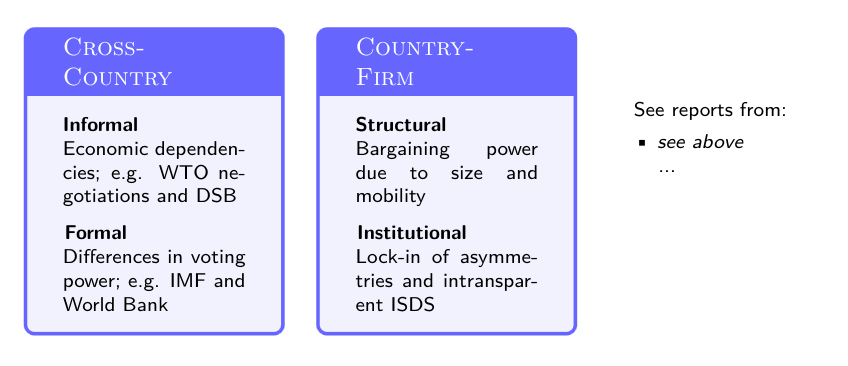
Critique: unequal power
Example: the cotton dispute
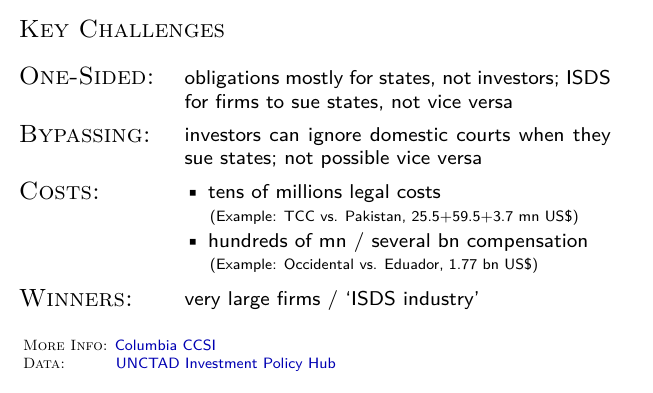
Example: ISDS
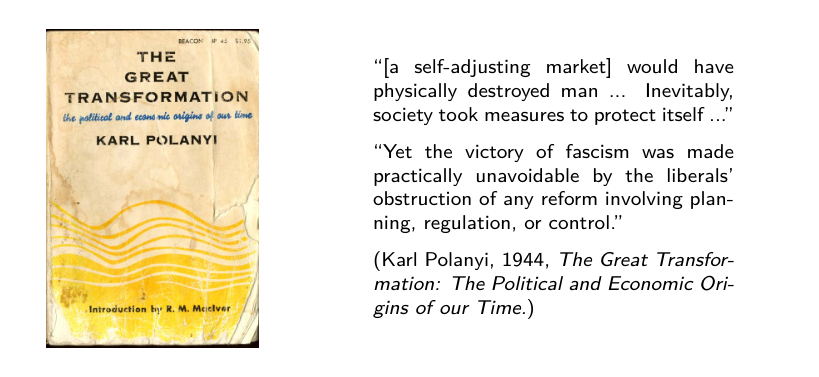
The great transformation
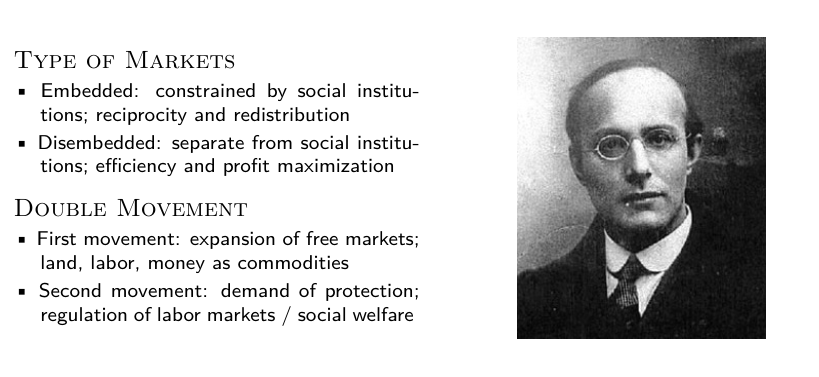
Example
Compensation thesis
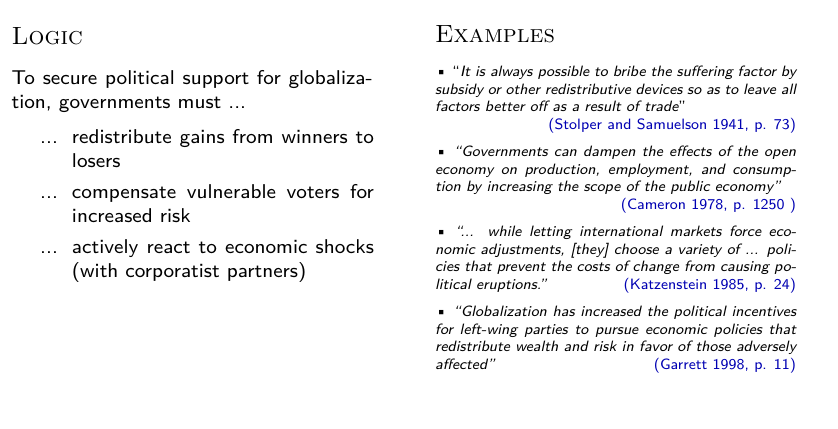
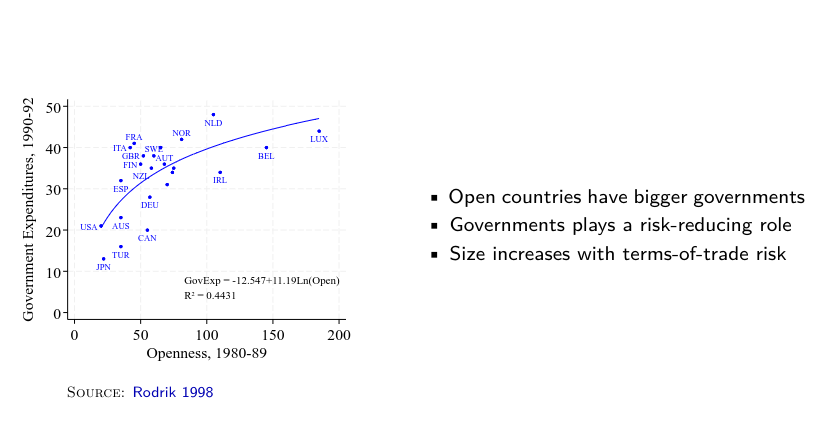
Openness and government size
Critique: race to the bottom
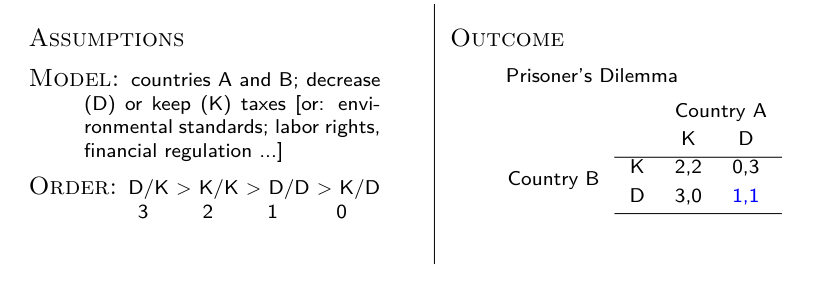
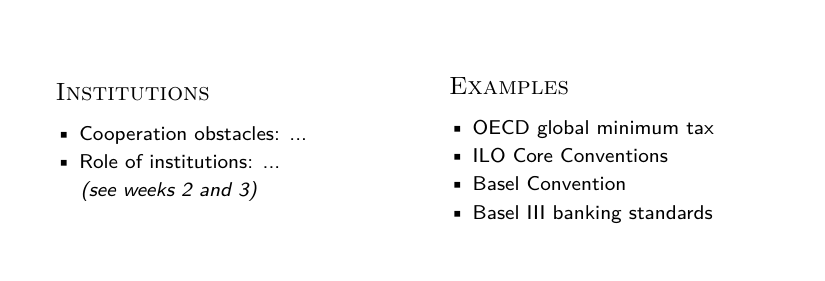
Global problems, global solutions
Critique: sovereignty
The globalisation paradox
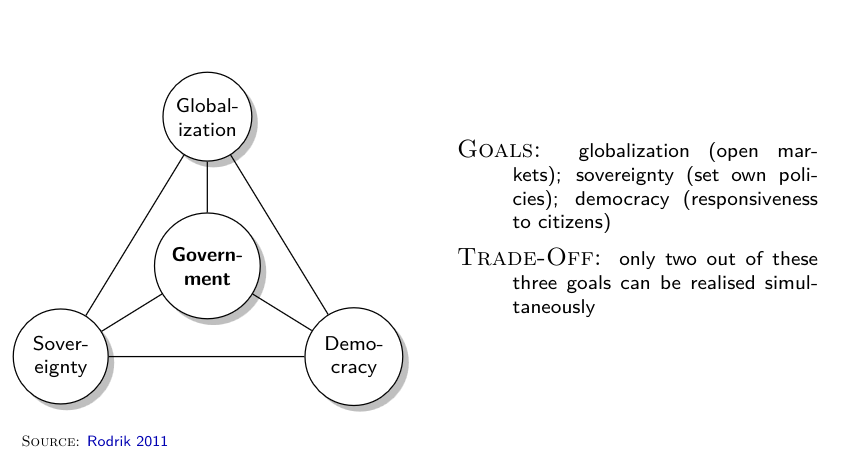
Conclusion
- Risk of backlash debated for a century.
- Early globalization literature (too) optimistic.
- Growing authoritarianism as predicted by Polanyi.
- Perpetual tension between free markets, inequality and democracy?